
Ned Doheny: The Missing Link in the California Sound
How one of Los Angeles' most sophisticated songwriters helped define West Coast soul—and somehow remained outside the spotlight
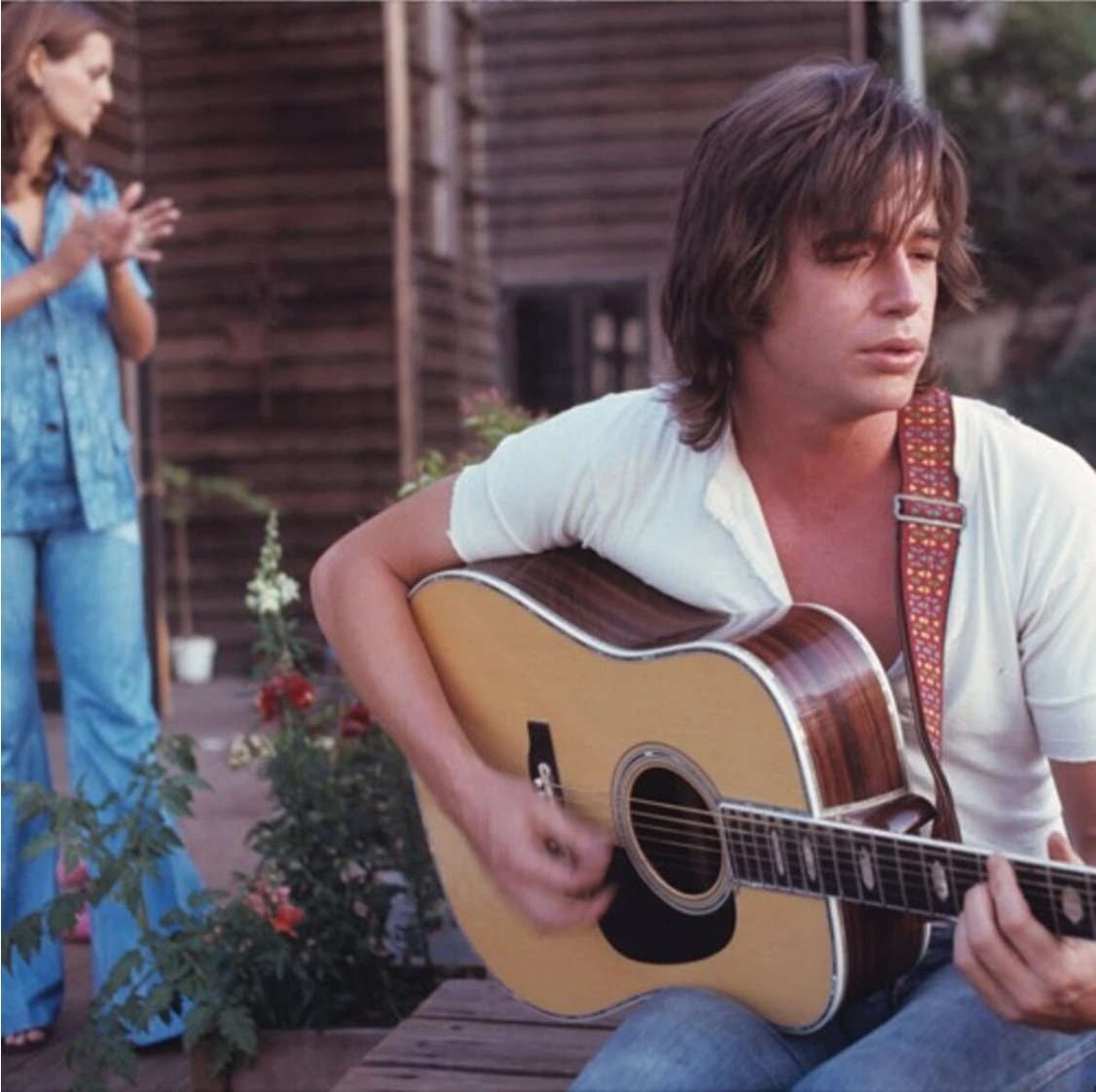
Ned Doheny, mid-1970s
🎤 The Laurel Canyon years
There is a peculiar category of musician whose influence seems wildly disproportionate to his fame. Ned Doheny belongs near the top of that list.
His résumé reads like that of someone who should be permanently embedded in the mythology of 1970s Los Angeles. He came of age alongside Jackson Browne, J.D. Souther, Glenn Frey, Don Henley and Linda Ronstadt. He was among the earliest artists associated with David Geffen's Asylum Records. His records involved musicians including David Foster, Steve Cropper and members of Tower of Power. His songs were recorded by Average White Band and Chaka Khan. Yet ask the average classic-rock listener to identify Ned Doheny and there is a good chance the name produces a blank stare.
That contradiction is precisely what makes Doheny important from a Sonic Atlas perspective.
Sonic Atlas is ultimately about discovery—not merely identifying famous records, but finding those moments when songwriting, musicianship and recording craft converge into something extraordinary. Doheny's Hard Candy is one of those records.
From Laurel Canyon to California Soul
Doheny occupied an unusually privileged position inside the Los Angeles musical community before most of that community became famous. He befriended Jackson Browne early, moved through Laurel Canyon's emerging songwriter circles and became one of the young artists surrounding the newly formed Asylum Records. His 1973 self-titled debut was an understated mixture of acoustic jazz-rock, folk and sophisticated singer-songwriter material. Contemporary critical reaction recognized the musical intelligence of the album, but sales did not follow.
Something more interesting happened next.
Doheny encountered Average White Band and became particularly close with guitarist and vocalist Hamish Stuart. Together they wrote “A Love of Your Own” and “Whatcha Gonna Do for Me.” Average White Band recorded the former and later recorded the latter; Chaka Khan's 1981 recording of “Whatcha Gonna Do for Me” became one of the song's best-known interpretations.
For Doheny, the relationship also unlocked rhythm.
The introspection of Laurel Canyon began colliding with funk, R&B and jazz. Instead of simply accompanying songs, the rhythm section became part of the composition. Doheny discovered something that separates much of his best music from conventional 1970s singer-songwriter material: the groove could carry as much emotional information as the lyric.
And that realization led directly to Hard Candy.
Hard Candy: The Record That Should Have Been Huge
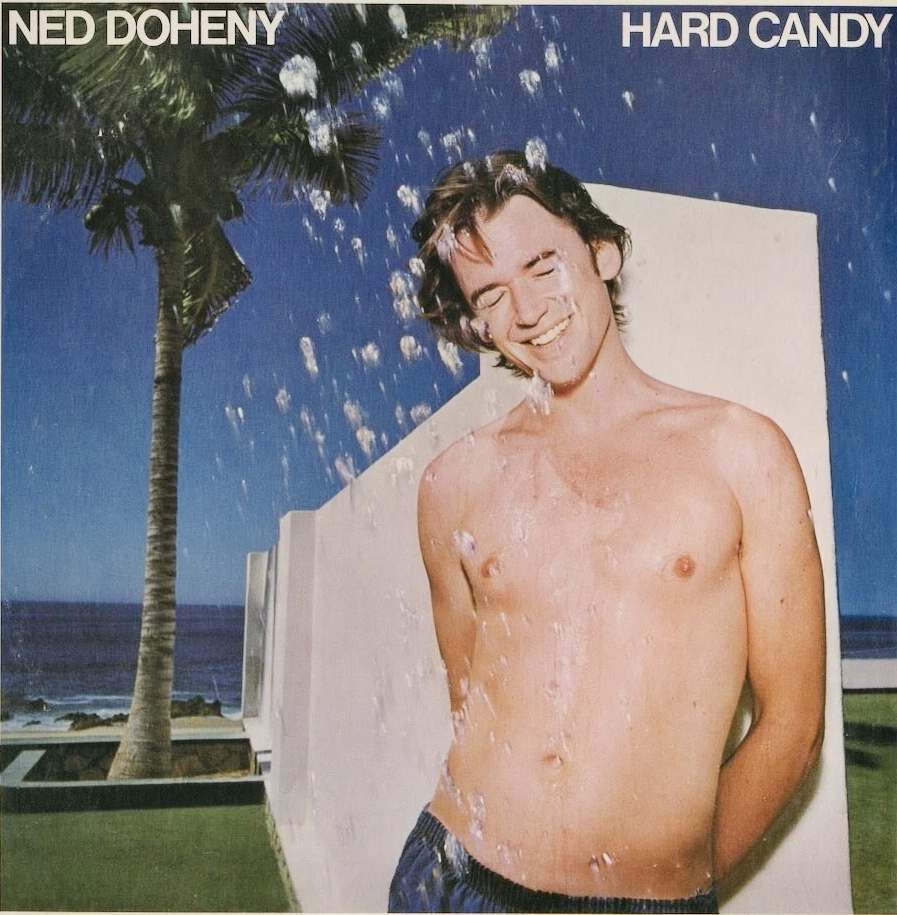
Hard Candy (1976)
🎧 The audiophile's gem
Released in 1976, Hard Candy was produced by Steve Cropper, the legendary guitarist associated with Booker T. & the M.G.'s and the Stax sound. The sessions included David Foster, Gary Mallaber and other exceptional session players, while the broader personnel pool included Don Henley, Glenn Frey, J.D. Souther and Linda Ronstadt. Cropper also brought in the formidable Tower of Power horn section.
That lineup matters.
But what makes Hard Candy special isn't celebrity spotting. It is how little the record sounds like musicians attempting to impress one another.
Everything serves the pocket.
Listen to “Get It Up for Love.” The arrangement breathes. Guitar figures appear and disappear rather than dominating the mix. Bass and drums establish propulsion without turning the recording heavy. Keyboards provide harmonic color. Horns arrive with tremendous transient energy but don't overwhelm the vocal.
On a revealing hi-fi system, the record becomes an exercise in space.
That is one reason Hard Candy belongs naturally inside Sonic Atlas. Great recordings are not necessarily recordings with enormous bass, spectacular treble or exaggerated stereo effects. Often they are recordings where musicians have been given distinct physical and rhythmic territory.
Hard Candy does that beautifully.
Doheny's voice floats almost casually above the arrangements while an exceptionally disciplined collection of players works underneath him. The result is simultaneously relaxed and rhythmically precise—one of the hardest combinations in recorded music to achieve.
Too Funky for Laurel Canyon, Too Subtle for Disco
Unfortunately, that sophistication may also help explain why Doheny never became a household name.
The record industry likes categories.
Doheny stubbornly existed between them.
He wasn't quite the introspective acoustic singer-songwriter represented by James Taylor or Jackson Browne. He wasn't straightforward rock. He wasn't R&B, although Black artists were recording his songs. He wasn't disco, although some of his music worked beautifully on dance floors. And he wasn't yet what listeners would decades later comfortably describe as AOR, yacht rock or West Coast soul.
Even Doheny later recalled being positioned commercially against artists such as Boz Scaggs. Hard Candy sold poorly in America despite finding considerably warmer receptions in Japan and the United Kingdom.
Timing could hardly have been crueller. Boz Scaggs' Silk Degrees arrived during essentially the same period and demonstrated that a sophisticated mixture of rock, soul, jazz and studio precision could become enormously successful.
Doheny had many of the same ingredients.
He simply didn't get the breakthrough.
Then Came Prone—and America Barely Heard It
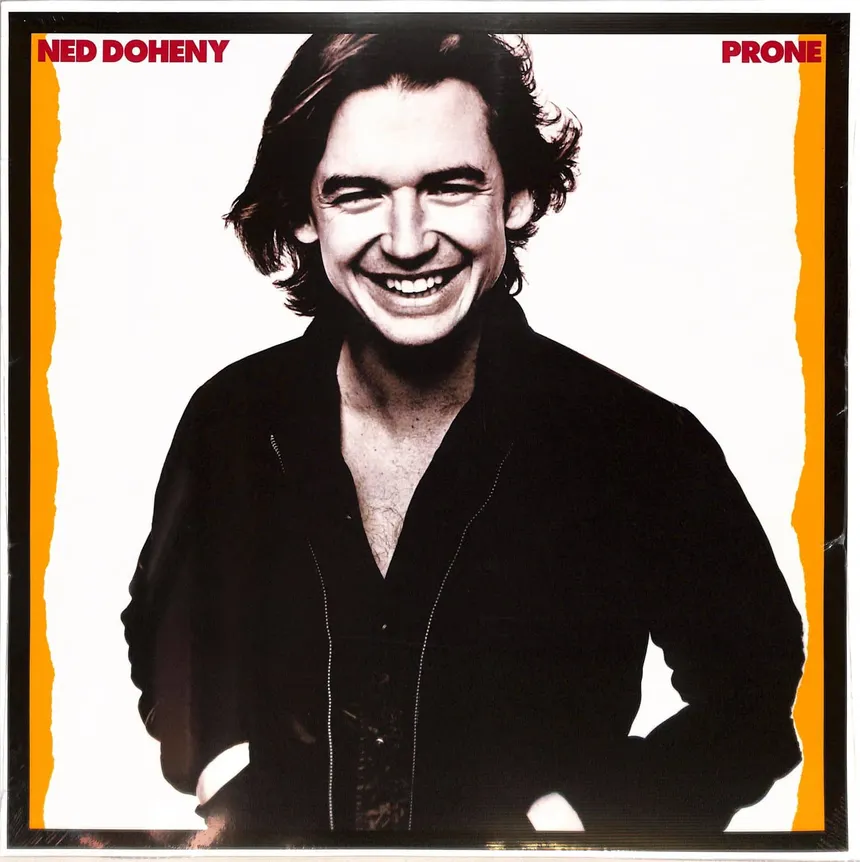
Prone (1979)
🎵 The Japanese cult classic
Doheny continued working with Steve Cropper and recorded another remarkably polished collection: Prone.
But instead of establishing Doheny in America, the album became another chapter in his strange disappearing act. CBS ultimately released Prone in Japan in 1979, where Doheny had developed a substantially more enthusiastic following. “To Prove My Love” also became an underground dance favorite in Britain.
Think about what that meant historically.
One of the logical extensions of the California sound—music connecting Laurel Canyon songwriting with funk rhythm sections, sophisticated studio production and jazz-influenced harmony—effectively disappeared from the American record-store narrative.
The Eagles became canonical.
Steely Dan became canonical.
Boz Scaggs became canonical.
Ned Doheny became collectible.
There is an enormous difference.
The Audiophile Rediscovery
Fortunately, records have a strange ability to correct history.
Collectors, DJs and musicians gradually rediscovered Doheny. The 2014 Separate Oceans anthology brought together material from his early career and previously unreleased recordings. Reissue label Be With Records subsequently returned Hard Candy, Prone and his self-titled debut to vinyl, while Doheny finally undertook his first UK and European shows in 2015.
That revival makes perfect sense.
Modern listeners no longer require Doheny to fit neatly into the marketing categories that constrained him in 1976. What once sounded commercially ambiguous now sounds remarkably coherent.
- Soul — Warm, emotive, and deeply felt
- Jazz — Harmonic sophistication and improvisational flair
- Funk — Tight, grooving rhythm sections
- Singer-songwriter intimacy — Intimate, personal lyrics
- West Coast polish — Immaculate 1970s studio craftsmanship
They coexist effortlessly.
And today's resurgence of interest in sophisticated 1970s production has created precisely the audience that Doheny should have had all along.
The Sonic Atlas Verdict
Ned Doheny isn't significant because he almost became famous.
He's significant because the records survived fame's absence.
Put Hard Candy on a capable system and forget the term “yacht rock” for forty minutes. Listen instead to the decay around the instruments. Listen to how the bass interacts with the kick drum. Follow the placement of guitars and keyboards across the soundstage. Notice how the horns explode into the arrangement and then disappear again. Listen to the absence of clutter.
Then listen to the songs.
That is the revelation.
Behind all that immaculate 1970s studio craftsmanship was an unusually sophisticated songwriter who understood melody, harmony, rhythm and restraint.
Ned Doheny spent his career standing only a few feet away from some of the biggest names in California music. History simply pointed the camera in the other direction.
Sonic Atlas exists for artists exactly like him.
Keep Reading
Even in the Quietest of Moments, a Thunderous Applause
From their formation in 1970 to the landmark Breakfast In America and beyond — a personal journey through the catalogue of Supertramp.
The Interesting History of April Wine
A Canadian hard rock institution that delivered anthems, arena-filling riffs, and one of the most electrifying live recordings of the early 1980s.
The Reason Why Progressive Rock Reigns Supreme
Syncopated rhythms, odd time meters, and stellar musicianship — why progressive rock from the 1970s still commands repeated listens 50 years later.
A Beginner's Guide to NWOBHM
The New Wave of British Heavy Metal launched Iron Maiden, Def Leppard, and Saxon — and planted the seeds for thrash, power, and progressive metal. Here's where to start.