
Even in the Quietest of Moments, a Thunderous Applause
A personal journey through the catalogue of Supertramp — from Crime Of The Century to the 2026 remaster of Breakfast In America.
The Formation of Supertramp
Supertramp began in London in 1970, born from an unlikely pairing. Rick Davies, a blues-influenced keyboardist and vocalist, placed an advert in Melody Maker seeking musicians. Roger Hodgson — a young, classically inclined singer, guitarist, and songwriter fresh from boarding school — answered the call. The two could hardly have been more different in temperament and musical instinct, yet that contrast became the engine of everything that followed. Funded initially by Dutch millionaire Stanley August Miesegaes, the early lineup cycled through members before settling into the classic five-piece in 1973: Davies, Hodgson, bassist Dougie Thomson, drummer Bob Siebenberg, and saxophonist John Helliwell. It was this configuration that would carry the band from cult progressive act to global phenomenon over the next decade.
First Exposure: The Breakfast In America Tour
Our first encounter with Supertramp was during the Breakfast In America tour at the Oakland Coliseum — and it happened to be our very first concert experience. There is something about a first live music experience that imprints itself permanently, and this one delivered on every level. The songs were fantastic live — tight, dynamic, and layered in ways the studio recordings only hinted at. But what left the deepest physical impression was the kick drum sound of Bob Siebenberg. That low-end punch was enormous in the arena, a concussive force that hit with physical force on every downbeat. It was visceral in a way that headphones and home speakers simply cannot replicate. From that night forward, Supertramp occupied a permanent place in the rotation.
Sonic Excellence: The MOFI Crime Of The Century
Besides being a progressive rock act of the highest order, what we appreciated equally about Supertramp was their attention to sonic reproduction excellence. These were recordings engineered with care and mixed with spatial precision — music that rewarded a quality playback system. Case in point: the Mobile Fidelity Sound Lab release of Crime Of The Century. This was, notably, MOFI's very first rock title — the pressing that essentially launched their reputation in the audiophile community. Half-speed mastered by Stan Ricker at JVC and pressed on virgin vinyl in Japan, the MOFI edition revealed a three-dimensional soundstage and a level of clarity that standard domestic pressings could not approach. The dynamic range, the low-end weight of Siebenberg's drums, the spatial separation of Helliwell's saxophone — all of it came into sharper focus. It remains one of the most sought-after pressings in the audiophile world, and for good reason: it demonstrated what was possible when mastering and manufacturing were treated as an art form rather than an industrial process.
Give a Little Bit: The Quiet Power of Melody
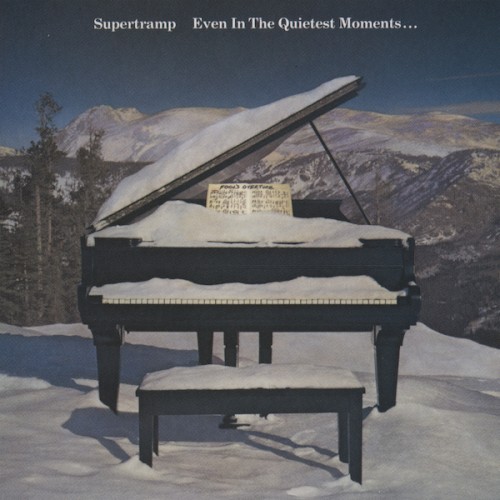
Even In The Quietest Moments, released in 1977, found Supertramp refining their balance between progressive complexity and accessible songwriting. And nowhere is that balance more evident than on "Give a Little Bit." The song really resonated with us — and continues to. It is such a simple little song at its core: an acoustic guitar figure, a memorable hook line, and a great melody that lodges itself in your consciousness and refuses to leave. There is no virtuosic showboating, no extended instrumental passages. Just craft. The kind of craft that makes a song feel effortless while being anything but. It is a reminder that progressive rock, at its best, is not about complexity for its own sake — it is about using whatever tools serve the song, whether that means a 20-minute suite or a three-minute acoustic gem.
Breakfast In America: The Confluence
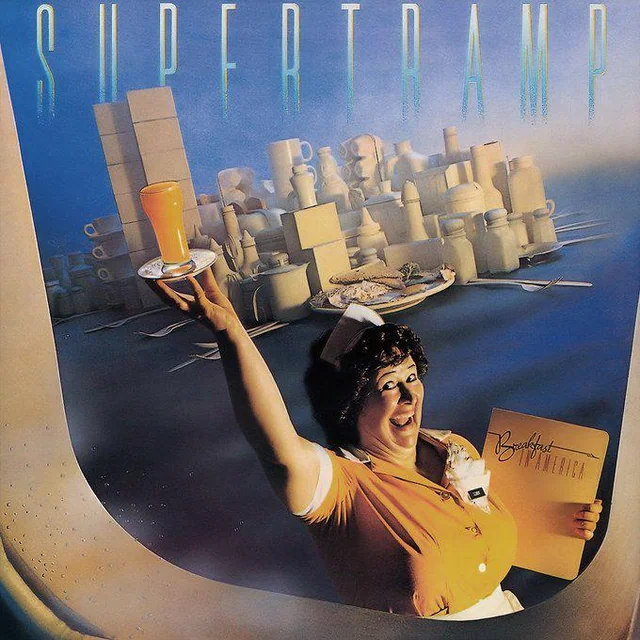
Everything came together on Breakfast In America. This was the record where sonic production and songwriting arrived at a confluence — where the meticulous attention to sound quality that defined their earlier work met a collection of songs so strong that the album became inescapable. "The Logical Song," "Goodbye Stranger," "Take the Long Way Home" — each one a perfectly constructed piece of pop-prog that could fill an arena and reward close headphone listening in equal measure. The result was an indelible mark on the progressive rock world: proof that ambition and accessibility need not be enemies, that a band rooted in 1970s art rock could command the global charts without compromising an ounce of musical integrity.
What Followed: Paris and the Final Chapter
Paris (1980) — Live at Pavillon de Paris
They followed Breakfast In America with Paris — a live album captured during the 1979 tour at the Pavillon de Paris. Recently re-released and expanded as Live In Paris '79, the set draws from different nights than the original 1980 double LP and presents the complete concert experience. It is a document of a band operating at absolute peak confidence, translating their studio precision to the stage with remarkable fidelity.
Their next studio release, ...Famous Last Words... (1982), was in fact Roger Hodgson's swan song with the band. He departed in 1983 to pursue a solo career and ultimately stepped away from the music scene permanently — a quiet exit for someone whose voice and compositions had defined so much of what Supertramp meant to listeners worldwide.
Supertramp continued without him, releasing Brother Where You Bound in 1985. It was a respectable album — the 16-minute title track featured Scott Gorham from Thin Lizzy on rhythm guitar — a connection made through family, as Gorham is Bob Siebenberg's cousin — alongside David Gilmour of Pink Floyd on soaring lead solos. But the album overall lacked a certain magic that Hodgson had provided. His melodic sensibility, his voice, his particular brand of optimistic lyricism — these were irreplaceable elements. The band started their eventual decline after his departure, never quite recapturing the chemistry that had produced their finest work.
Yet in retrospect, the 2026 half-speed remaster of Breakfast In America — cut by Miles Showell at Abbey Road Studios — is a worthwhile pickup and a stunning document. It balances the album with all the right attributes: dynamic range, spatial clarity, warmth, and punch. A reminder that when the songwriting and the sonics align, the music is timeless.
Keep Reading
Architecting the Steven Wilson Universe
How one obsessive English auteur turned progressive rock into a modular system of bands, alter egos, sonic laboratories, archival interventions and spatial-audio evangelism — mapped across Porcupine Tree, the side-project laboratories, the solo canon and the remix work.
Aja Breathes; Gaucho Merely Has Excellent Manners
Why Steely Dan's 1977 masterpiece Aja remains sonically preferable to its immaculately upholstered successor Gaucho. Gaucho is perfection completed; Aja is perfection kept alive.
Best Supertramp Breakfast in America Vinyl Pressing: Original vs. MoFi vs. 2026 Half-Speed
Did the 2026 Abbey Road half-speed master finally produce the definitive affordable version? We compare four mastering lineages spanning 47 years.
Best Supertramp Crime of the Century Vinyl Pressing: Which Version Sounds Best?
One of the finest analog demonstration records ever made — but which pressing delivers? We compare the producer-endorsed UK original, Speakers Corner, MoFi UHQR, and the new Abbey Road half-speed master.