
Best Supertramp Breakfast in America Vinyl Pressing: Original vs. MoFi vs. 2026 Half-Speed
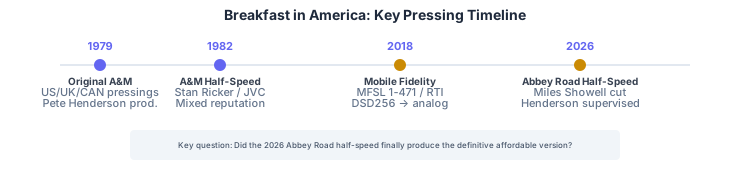
Did the 2026 Abbey Road half-speed master finally produce the definitive affordable version of Breakfast in America?
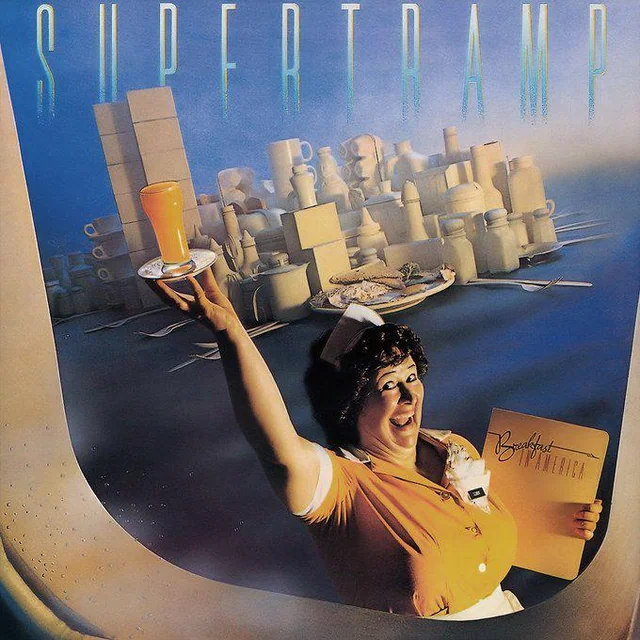
SupertrampBreakfast in America (1979)
Breakfast in America is Supertramp's commercial peak — over 22 million copies sold, four Billboard hit singles, a Grammy for Best Engineered Album. The production, overseen by Supertramp and co-produced by Peter Henderson, is meticulous: layered Wurlitzer piano, precise vocal harmonies, wide stereo imaging, and a dynamic range that moves from intimate acoustic passages to full orchestral arrangements within a single track.
That production quality makes it a demanding test of any vinyl pressing. And there are now four meaningfully different mastering lineages available. The question for 2026 is straightforward: do you need an expensive vintage or MoFi pressing, or can you buy the new Abbey Road half-speed master for $40 and be done?
1979 A&M Original Pressing
The original pressing was released simultaneously across multiple territories (US, UK, Canada, Netherlands) with different plants handling each market. US copies were pressed at multiple A&M-contracted facilities including the RCA Indianapolis plant (identified by the trumpet stamp in the dead wax — the mark of A&M Mastering Studios).
What to look for:
- A&M SP-3708 (US) or AMLK 64747 (UK)
- Trumpet stamp in dead wax (US copies mastered at A&M Studios)
- Gatefold sleeve with inner die-cut windows
- First-pressing US copies have the Indianapolis matrix markings
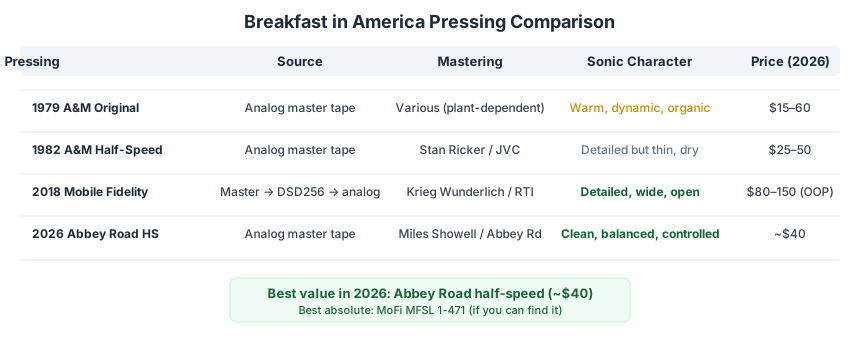
Sonic character: Warm, dynamic, with a natural weight to the low end. The Wurlitzer piano on "The Logical Song" has body and presence. Vocals sit naturally in the mix without sibilant edge. Stereo separation is good but not as precisely delineated as later audiophile cuts. Bass guitar has real punch on "Goodbye Stranger."
Verdict: A solid baseline. Clean copies sound very good, but the mastering is not exceptional — it was a commercial pressing optimized for wide compatibility rather than audiophile performance.
Price: $15–60 depending on condition and pressing variant.
1982 A&M Half-Speed Master (Stan Ricker / JVC)
A&M released a half-speed mastered edition in the early 1980s, cut by Stan Ricker at JVC Cutting Center and pressed in Japan. This was part of A&M's broader audiophile reissue program of the period.
Sonic character: More detailed than the standard pressing in the upper midrange, but opinions are divided. Some describe it as revealing; others find it dry, thin, and lacking the body of the original. The bass is leaner — less weight, more definition. Treble is extended but can tip toward brightness on forward-sounding systems.
Verdict: A mixed result. The half-speed technique extracts more high-frequency detail, but the overall tonal balance feels less natural than the original. Not the definitive version.
Price: $25–50.
2018 Mobile Fidelity (MFSL 1-471)
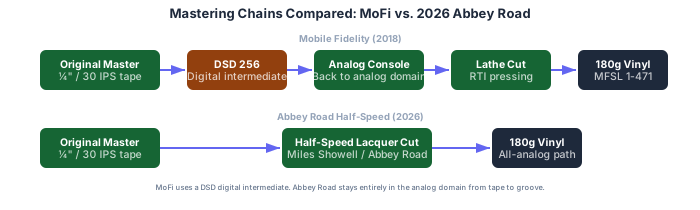
Mobile Fidelity's 2018 numbered edition was mastered from the original master tapes via their GAIN 2 Ultra Analog system: the tape is transferred to DSD 256, then converted back to analog for the lacquer cut. Pressed at RTI on 180g vinyl.
Sonic character: Wide, open, detailed. The soundstage is noticeably larger than any previous pressing. Instrument separation is excellent — you can hear the individual layers of the production with clarity that the 1979 pressing only hints at. "Take the Long Way Home" reveals harmonica details and room reverb that are simply absent on standard pressings.
However: some critical listeners have found it slightly clinical. The DSD intermediate, while transparent, introduces a subtle analytical quality that can make the presentation feel less emotionally engaging than the best all-analog pressings. It is technically superior but may not be everyone's preference.
Verdict: The most detailed and resolving version available. If absolute transparency and separation are your priority, this is the winner. But the analog warmth of the 1979 original is partially traded for precision.
Price: $80–150 (out of print, numbered edition, secondary market).
2026 Miles Showell Abbey Road Half-Speed Master
Released March 20, 2026, cut by Miles Showell at Abbey Road Studios using his proprietary half-speed mastering technique. The release was supervised by original co-producer Peter Henderson — a detail that matters, because Henderson knows exactly how this album is supposed to sound. The mastering chain is entirely analog: original master tape → half-speed lathe cut. No digital intermediate.
Sonic character: Clean, remarkably controlled, and free from the sibilance issues that plague many Breakfast in America pressings. "The Logical Song" — typically a torture test for upper-midrange hardness — plays without a trace of vocal edge. The background is genuinely silent between notes. Stereo imaging is wide and stable. Bass is well-defined without the bloat of some vintage copies or the leanness of the 1982 half-speed.
The balance Showell has achieved is notable: it combines the detail retrieval of half-speed mastering with a tonal naturalness that the 1982 version lacked. Henderson's involvement presumably ensured the final balance matches his intent.
Verdict: The best affordable version of this album in 2026. It may not quite match the MoFi's absolute width and separation, but it trades the DSD analytical quality for a warmer, more organic presentation — while staying entirely in the analog domain.
Price: ~$40 new (currently available).
Is the 2026 Breakfast in America Half-Speed Master Worth Buying?
Yes. Without hesitation. Here is the decision matrix:
- If you own nothing: Buy the 2026 Abbey Road. It is the best entry point at any price level.
- If you own the original: The 2026 is a meaningful upgrade in clarity, sibilance control, and background silence. Worth the $40.
- If you own the 1982 half-speed: The 2026 is significantly better — warmer, more natural, better balanced. Replace it.
- If you own the MoFi: Keep it. The MoFi remains the most detailed pressing. The 2026 is a complement (warmer) rather than a replacement (more resolving).
- If you want both qualities: Own the MoFi for analytical listening and the 2026 for musical enjoyment. They offer different but equally valid presentations of the same masterpiece.
How to Identify the Pressing You Have
- Trumpet stamp in dead wax — 1979 US A&M original (A&M Mastering Studios)
- "JVC" or "SR" in dead wax, pressed in Japan — 1982 half-speed master
- MFSL 1-471, numbered sticker, RTI pressing — 2018 Mobile Fidelity
- "Miles Showell" or "MS" in dead wax, Abbey Road — 2026 half-speed master
For a full guide to interpreting dead-wax markings, see How to Read the Dead Wax.
The Sonic Atlas Position
The 2026 Miles Showell half-speed master is the version we recommend for most listeners. It offers the best balance of sonic quality, affordability, and availability. The all-analog mastering chain, Henderson's supervisory involvement, and Showell's proven expertise at Abbey Road have produced a pressing that honors the original production intent while extracting detail that the 1979 commercial pressing left on the tape.
For the archive, the MoFi remains the reference for maximum detail retrieval. But the Abbey Road pressing is what we would hand someone who asked: "I want to hear Breakfast in America on vinyl. What should I buy?"
The answer is finally easy: buy the 2026. Forty dollars. Done.
Keep Reading
Best Supertramp Crime of the Century Vinyl Pressing: Which Version Sounds Best?
One of the finest analog demonstration records ever made — but which pressing delivers? We compare the producer-endorsed UK original, Speakers Corner, MoFi UHQR, and the new Abbey Road half-speed master.
Best Pink Floyd Meddle Vinyl Pressing: UK Original vs. MoFi vs. 2016
Which Meddle pressing sounds best? We compare the UK Harvest original, Japanese EMI, Mobile Fidelity half-speed, and the excellent 2016 remaster — with firsthand listening notes.
Best Rush Permanent Waves Vinyl Pressing: Which Version Sounds Best?
Over 200 versions on Discogs. The MASTERDISK HW inscription is the collector's signal — but can a modern Sean Magee remaster actually improve upon it? We compare originals, MoFi, and Abbey Road cuts.
Best Pink Floyd The Wall Vinyl Pressing: Which Version Actually Sounds Best?
Same album. Same music. Dramatically different sound. We compare original US and UK copies, the 2011 Doug Sax remaster, the 2016 Grundman reissue, and more — with a clear verdict.