
How to Read the Dead Wax: The Secret History Written in Your Record's Runout
Every vinyl record carries a forensic document in its runout groove. Here's how to decode it.
Between the final groove and the label lies a smooth, ungrooved band of vinyl called the dead wax — also known as the runout, the matrix area, or the trail-off. To casual listeners it is blank space. To informed collectors it is the most important part of the record.
Etched or stamped into this area are alphanumeric codes, initials, symbols, and sometimes handwritten messages that identify who mastered the record, which lacquer it was cut from, which pressing plant manufactured it, and how many generations removed it is from the original cutting. That information can mean the difference between a $20 record and a $500 record — and more importantly, between a mediocre pressing and a revelatory one.
Those markings matter because they can identify different mastering and manufacturing histories behind apparently identical records. See Why Do Different Vinyl Pressings Sound Different? for the full explanation of how each stage in the production chain leaves an audible fingerprint.
What You're Looking At
Hold a record under angled light and examine the dead wax. You will typically find some combination of the following:
- Matrix number — The catalog number plus a side identifier (A/B, 1/2) and sometimes additional suffixes
- Mastering engineer initials — Hand-etched by the person who cut the lacquer
- Mastering studio identifier — Sometimes spelled out, sometimes coded
- Stamper/mother codes — Letters or numbers indicating which generation stamper was used
- Pressing plant codes — Identifying where the record was physically manufactured
- Messages — Personal notes, jokes, or dedications from the mastering engineer
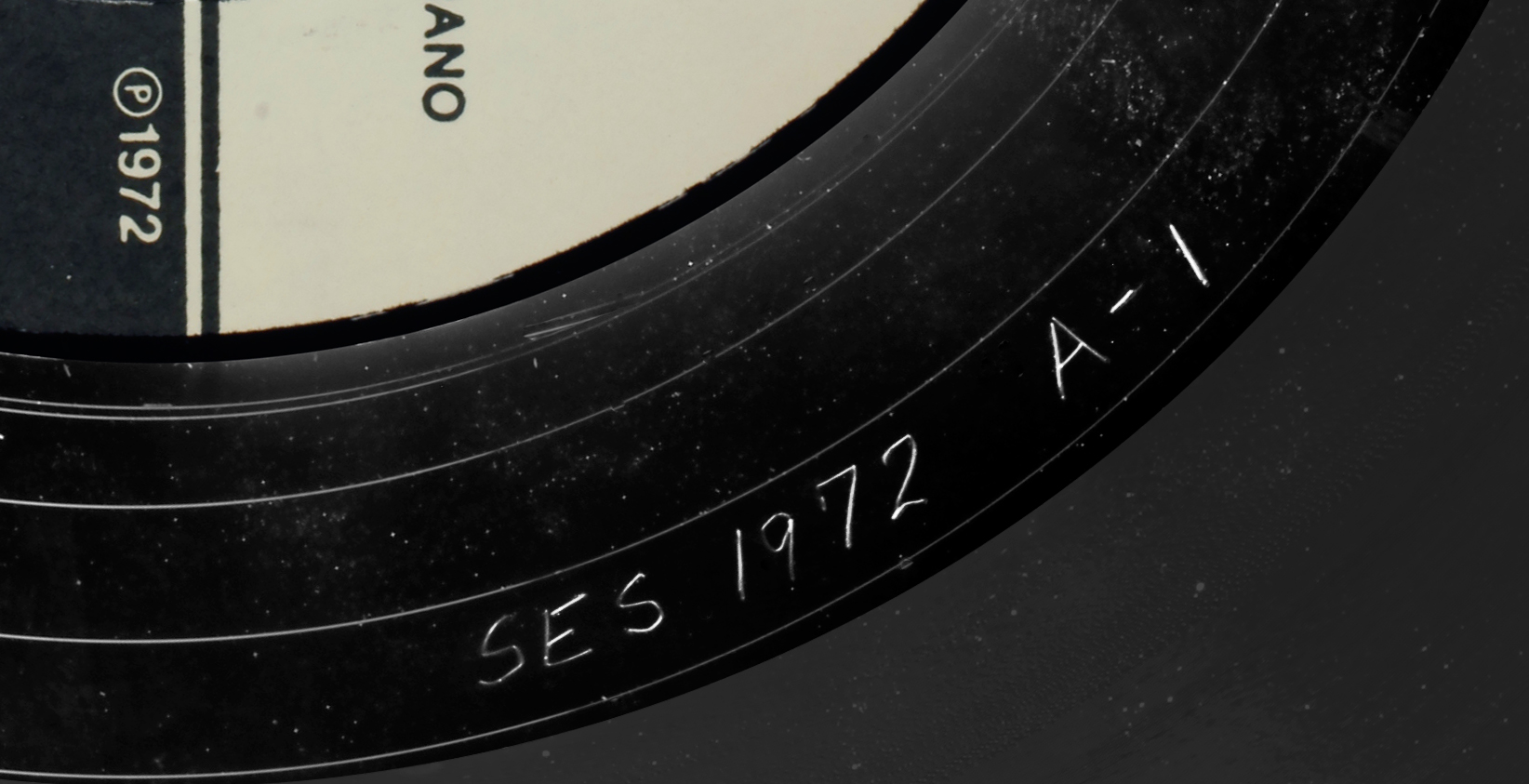
Some markings are hand-etched (scratched into the lacquer by the mastering engineer with a stylus). Others are machine-stamped (embossed during the electroplating or pressing process). Hand-etched markings generally indicate closer proximity to the original lacquer cutting.
Mastering Engineer Initials: The Most Valuable Markings
When a mastering engineer cuts a lacquer, they often etch their initials into the dead wax as a signature. These initials are among the most sought-after identifiers in vinyl collecting because they tell you exactly who processed the audio before it became a physical record.
| Initials | Engineer | Studio |
|---|---|---|
| RL | Robert Ludwig | Sterling Sound / Masterdisk / Gateway |
| BG | Bernie Grundman | Bernie Grundman Mastering |
| KG | Kevin Gray | Cohearent Audio (KG@CA) |
| CB | Chris Bellman | Bernie Grundman Mastering |
| GK | George Marino | Sterling Sound |
| TML | Doug Sax / Mike Reese | The Mastering Lab |
| Porky / Pecko | George Peckham | Porky's / The Master Room (UK) |
| MASTERDISK | Various (Howie Weinberg, others) | Masterdisk, NYC |
| STERLING | Various | Sterling Sound, NYC |
| ARTISAN | Various | Artisan Sound Recorders |
Why This Matters
An “RL” in the dead wax of a Led Zeppelin II is one of the most valuable pressings in rock vinyl history. Robert Ludwig's original mastering was recalled by Atlantic for being “too loud” — the few copies that escaped before the recall now command thousands of dollars. Same album, same songs, same band. Different mastering. Completely different sound — and completely different value.
Pressing Plant Identification
The pressing plant determines manufacturing quality — flatness, surface noise, centering, and consistency. Common identifiers include:
| Code / Marker | Plant | Notes |
|---|---|---|
| PR | Presswell (NJ) | Common US indie plant, 1960s–80s |
| MO | Monarch (LA) | Major US plant for Capitol, others |
| SP | Specialty Records (PA) | Pressed for many labels |
| W / Wly | Columbia/CBS Pitman or Santa Maria | CBS in-house plants |
| 1-A, 2-B, etc. | Various (stamper generation) | Lower letters = earlier stamper = closer to lacquer |
| GZ, MPO, Pallas | European plants | Often spelled out or coded in matrix |
Stamper Codes: How Far from the Source?
A vinyl record is not pressed directly from the original lacquer. The chain goes:
Each generation introduces potential quality loss. Earlier stampers generally produce quieter surfaces.
Stamper codes in the dead wax tell you which generation you have. Common systems include:
- Letter codes — A = first stamper, B = second, etc. “1A/1B” is typically the earliest pressing from the first stamper set
- BUCKINGHAM / GRAMOPHONE — Some UK plants used letter-substitution systems where each letter of a word represents a number (B=1, U=2, C=3...)
- Numeric suffixes — -1, -2, -3 after the matrix number may indicate sequential lacquers
The practical takeaway: lower letters and lower numbers generally mean an earlier stamper — closer to the original lacquer, potentially quieter surfaces, and sharper groove detail. A pressing from stamper “A” cut from the first lacquer is the closest you can get to what the mastering engineer heard in the cutting room.
Hand-Etched vs. Machine-Stamped
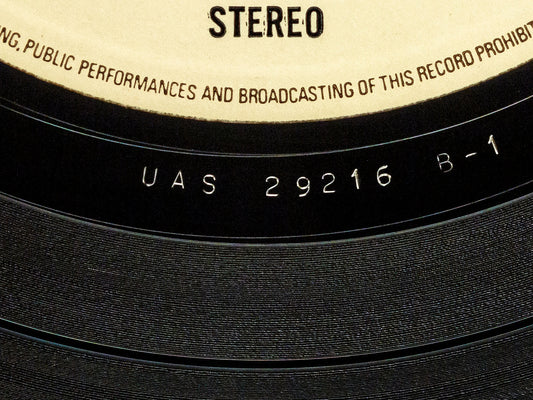
This distinction matters more than most collectors realize.
- Hand-etched — Scratched into the lacquer by the mastering engineer at the time of cutting. These markings indicate a first-generation lacquer. They appear slightly irregular, often at an angle, with varying depth.
- Machine-stamped — Embossed mechanically during the plating or pressing process. These appear uniform, perfectly aligned, and identical across all copies. They indicate production information added after the lacquer stage.
A record with hand-etched engineer initials was made from that engineer's actual lacquer. A record with only machine-stamped codes may be a later pressing from a replacement stamper, a different plant, or a different mastering entirely.
George “Porky” Peckham: The Dead Wax Legend
No discussion of dead wax is complete without George Peckham. The British mastering engineer — who cut lacquers for Genesis, Led Zeppelin, The Beatles, The Smiths, and hundreds of others — turned the runout into his personal canvas. His signatures include “A Porky Prime Cut,” “Pecko!,” and elaborate messages scratched into UK pressings from the 1970s onward.
Peckham started as a trainee disc cutter at Apple Studios in 1968, became chief disc cutter within a year, and eventually ran his own mastering facility. His presence in the dead wax is a quality indicator — not because every Porky cut is sonically perfect, but because it confirms the record was mastered by an experienced engineer who cared enough to sign his work.
What to Look For When Buying
Armed with this knowledge, here is a practical workflow for evaluating a vinyl purchase:
- Check the runout on Discogs — Most entries include photographed or transcribed dead wax information
- Identify the mastering engineer — Cross-reference initials against known engineers
- Note the stamper generation — First stamper (A or 1) from the first lacquer is ideal
- Identify the pressing plant — Match plant codes against known quality reputations
- Compare variants — The same catalog number may have been pressed at multiple plants with different lacquers
- Look for hand-etched markings — These confirm proximity to the original cutting session
A $5 garage-sale find with “RL” or “KG” in the dead wax may outperform a $40 modern reissue pressed from a digital source at an unknown plant. The dead wax tells you which one you're holding.
The Sonic Atlas Position
We examine runouts on every vinyl record in the archive. It is part of the forensic process that determines not just what we own, but which version we own — and whether a better version exists.
The dead wax is not decoration. It is provenance. It connects the record in your hands to a specific mastering engineer, a specific cutting session, a specific stamper generation, and a specific manufacturing facility. That chain of custody determines what you actually hear when the needle drops.
Learn to read it. Once you do, you will never look at a record the same way again.
Keep Reading
Why Do Different Vinyl Pressings Sound Different? Mastering, Matrix Numbers & Pressing Plants Explained
Two records can contain the same album and still sound conspicuously different. Learn why mastering, lacquer cutting, metalwork, and pressing plants all leave an audible fingerprint on vinyl.
Best Vinyl Pressing: How to Find the Best-Sounding Version of Any Album
Original pressing, remaster, reissue or audiophile edition? Learn how to use matrix numbers, mastering credits, pressing plants and Discogs to find the best-sounding vinyl pressing before you buy.
Best Led Zeppelin III Vinyl Pressing: Which Version Sounds Best?
UK plum first pressing, US Specialty Records, Classic Records 200g, and the 2014 Page remaster compared. Matrix numbers, plant codes, and buying recommendations.
Vinyl Mastering Engineers: How to Recognize the Best Cuts in the Dead Wax
Learn the mastering engineer initials collectors look for in vinyl dead wax — KG, BG, CB, RKS, RL, GP and more — and why the engineer can matter more than the label.