
Why Do Different Vinyl Pressings Sound Different?
Two records can contain the same album, carry the same artwork, list the same songs, and still sound conspicuously different on a revealing system — because mastering, matrix numbers, and pressing plants all leave a fingerprint.
That is one of the central truths of serious vinyl collecting — and one of the reasons the phrase "which pressing?" matters so much.
To a casual buyer, Crime of the Century is Crime of the Century. To a collector who has compared multiple copies, however, the album title is only the beginning of the identification process. The particular mastering, lacquer cut, metalwork, pressing plant, vinyl formulation, production generation, and physical condition can all influence what ultimately reaches the stylus.
This does not mean every pressing difference is dramatic. Nor does it mean an original pressing is automatically superior to a later reissue. It means that a vinyl record is not merely a container for a recording. It is the final physical product of a long manufacturing and mastering chain — and every stage can leave an audible fingerprint.
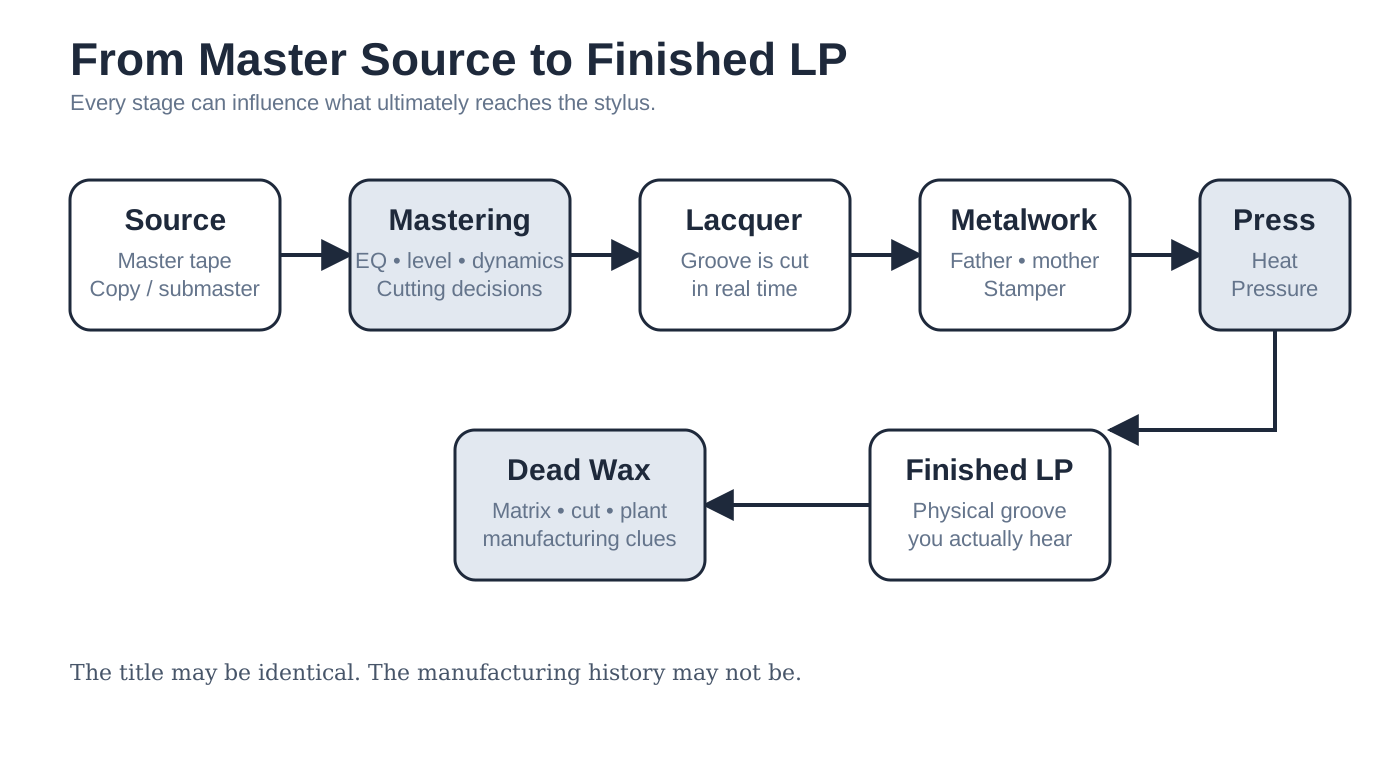
The Album Is Not the Pressing
When listeners compare compact discs or lossless digital files, they are usually comparing different masterings of essentially identical playback media. Vinyl adds another layer of variability because the music must be converted into a physical groove and then mechanically reproduced in quantity.
The same album may therefore exist as: an early lacquer cut made from the original stereo master; a later recut from an equalized production copy; a repress using older metal parts; a new lacquer cut prepared by a different mastering engineer; a reissue cut from a high-resolution digital transfer; or an audiophile edition produced with unusually careful source selection and manufacturing controls.
Those are not interchangeable circumstances. A useful way to think about vinyl is that the recording is the composition of the meal, while the pressing is the kitchen in which it was prepared. The ingredients may be nominally identical, yet execution can still alter the result.
1. The Source Used for Mastering
Before a cutting engineer can place music into a lacquer, there must be a source. Ideally, that source is the original master tape. But "original master" is not guaranteed simply because a record is old, expensive, or marketed as audiophile. Labels have historically used safety copies, EQ'd production masters, submasters, assembled album reels, digital transfers, and other intermediary sources.
Every generation matters because each additional analog copy can introduce small changes in noise, transient definition, phase coherence, tonal balance, and low-level information.
Digital sourcing is more complicated than the usual analog-versus-digital argument suggests. A first-rate high-resolution transfer from a well-preserved master tape can produce a superb vinyl release. Conversely, an all-analog record cut from a mediocre copy tape may be considerably less convincing.
The correct question is therefore not merely: "Is it analog?" It is: "What source was used, how was it prepared, and who mastered it?" That distinction is considerably more useful. For more on this topic, see AAA vs. Digital Source.
2. The Mastering Engineer and the Lacquer Cut
Once the source is selected, the cutting engineer has to translate it into something a stylus can physically track. This is not a clerical process.
Low frequencies require substantial groove movement. Excessive high-frequency energy can become difficult to track. Side length affects available groove spacing. Cutting level, EQ decisions, de-essing, compression, limiting, channel balance, and the handling of troublesome peaks can all affect the final lacquer.
Two engineers can begin with the same source and produce audibly different records. That is why collectors pay attention to names such as Bernie Grundman, Kevin Gray, Chris Bellman, Doug Sax, George Piros, Robert Ludwig, Stan Ricker, and other engineers whose work has become associated with recognizable standards of craft. See The Best Vinyl Mastering Engineers.
A particularly good cut can produce qualities collectors often describe as: greater transient immediacy; more realistic instrumental body; better bass articulation; deeper image layering; less congestion during complex passages; smoother but more extended treble; and a lower perceived veil between the listener and the recording.
3. Lacquer, Father, Mother, Stamper
The lacquer cut is only the beginning of physical production. Traditional record manufacturing converts that lacquer into metal parts that can ultimately stamp vinyl copies. The familiar chain is lacquer → metal master/father → mother → stamper.
A stamper is mounted in the record press and used to form the groove into heated vinyl. That manufacturing genealogy is one reason two nominally identical copies can differ. A record pressed from an early, clean stamper may not be identical to one produced after substantial stamper wear. A repress may use different metalwork entirely.
But the mythology needs restraint: an early stamper is not automatically superior. Poor mastering does not become excellent merely because the stamper is young. Production sequence is one variable among many.
4. The Pressing Plant Matters
After mastering and metalwork comes manufacturing. Different pressing plants have historically used different equipment, vinyl compounds, quality-control procedures, cooling cycles, handling practices, and production standards.
Collectors therefore learn to recognize plant identifiers from facilities such as Specialty, Presswell, Monarch, Columbia's Terre Haute, Pitman and Santa Maria plants, and — among modern audiophile manufacturers — RTI, QRP, Pallas, and Optimal. See Vinyl Pressing Quality in 2026.
A pressing plant can influence: background noise, non-fill, warpage, eccentricity, surface contamination, visible defects, and general consistency from copy to copy. A superb mastering can still be compromised by poor manufacturing. Likewise, a record pressed quietly and concentrically cannot rescue a lifeless mastering. The strongest vinyl releases occur when source, mastering, metalwork, and manufacturing are all working in the same direction.
5. The Dead Wax Is the Record's Forensic Record
The area between the final groove and the label is often called the dead wax, runout, or matrix area. For collectors, it is one of the most valuable parts of the record. The markings found there can reveal: catalog and matrix numbers, side designations, lacquer-cut numbers, mastering engineer initials or signatures, pressing-plant identifiers, plating information, mother or stamper clues, and handwritten or stamped production codes.
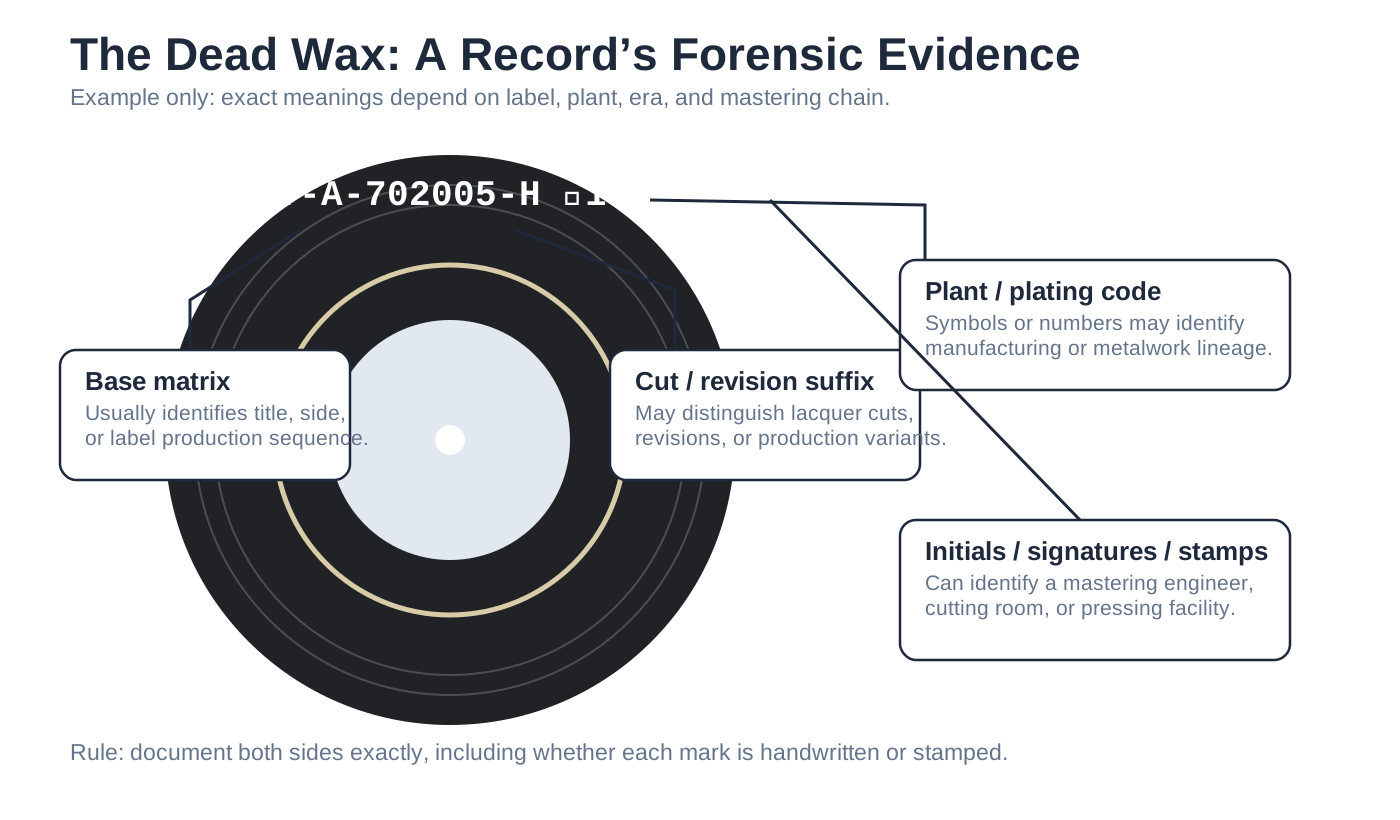
Consider a hypothetical matrix such as: ST-A-702005-H △19881 PR
To the uninitiated, that looks like industrial graffiti. To an experienced collector, it immediately raises useful questions: What does the base matrix identify? Is "H" a lacquer or revision indicator? Does the triangle number correspond to a particular plant or plating system? Is "PR" a plant code? Is the information handwritten or machine stamped?
The dead wax does not always provide a complete answer by itself, but it is often the fastest route toward identifying the actual pressing rather than merely the album. For a full guide, see How to Read the Dead Wax.
6. Original Pressing vs. Reissue: The Wrong Question
Collectors understandably place value on original pressings. They are historically interesting and, in many cases, sonically excellent. But "original or reissue?" is usually too crude a question. A better question is: "Which version was mastered and manufactured most successfully?"
A modern reissue may benefit from: access to a superior source; better tape playback and alignment; quieter vinyl; more precise plating; more consistent pressing; and a mastering engineer working without the production constraints imposed on the original release.
An original may benefit from: a fresher master tape; fewer source generations; contemporary knowledge of the recording; excellent original metalwork; or a mastering decision that subsequent versions never quite duplicated.
There is no universal winner. See The Original Pressing Myth.
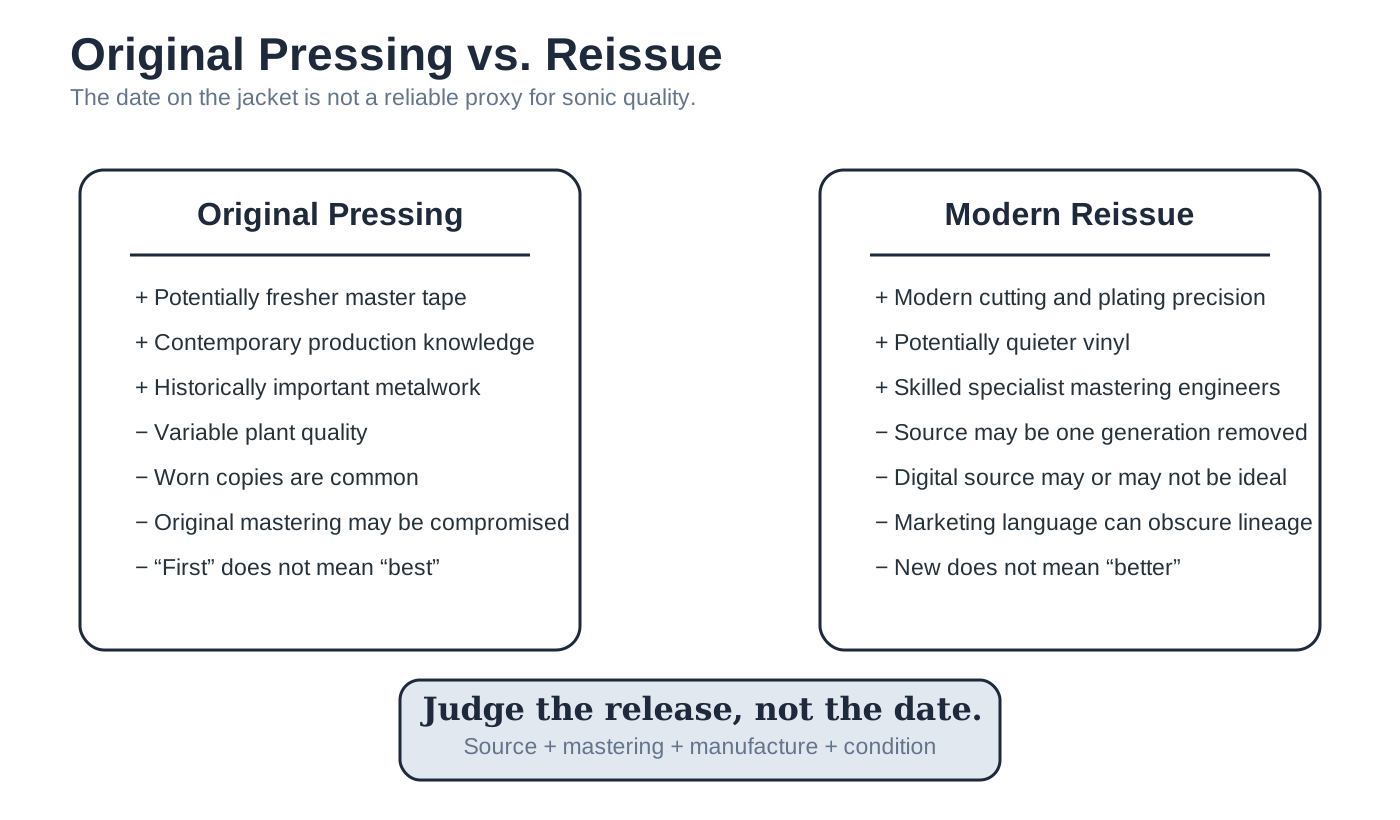
The sensible collector evaluates the individual release rather than pledging allegiance to a date on the copyright line.
7. Why Some Pressings Sound More "Alive"
When listeners describe one pressing as more open, immediate, dynamic, transparent, or lifelike, several technical differences may be contributing simultaneously. A better cut may preserve transient attack more convincingly. The bass may have been allowed to breathe rather than being thickened or compressed. Vocal presence may sit naturally in the mix instead of becoming aggressive. Cymbals may retain texture rather than collapsing into glare. Low-level reverberation and room information may remain audible beneath the main instruments.
These effects are especially obvious on a sufficiently resolving playback system. A turntable with incorrect cartridge alignment, excessive tracking force, poor azimuth, an unsuitable cartridge load, or a noisy phono stage can mask distinctions between pressings. See Turntable Setup — Precision Matters and MC Cartridge Loading.
Pressing comparisons become more meaningful when the playback chain is stable enough that the record — not the system setup — is the variable.
8. Sonic Atlas: How We Evaluate a Pressing
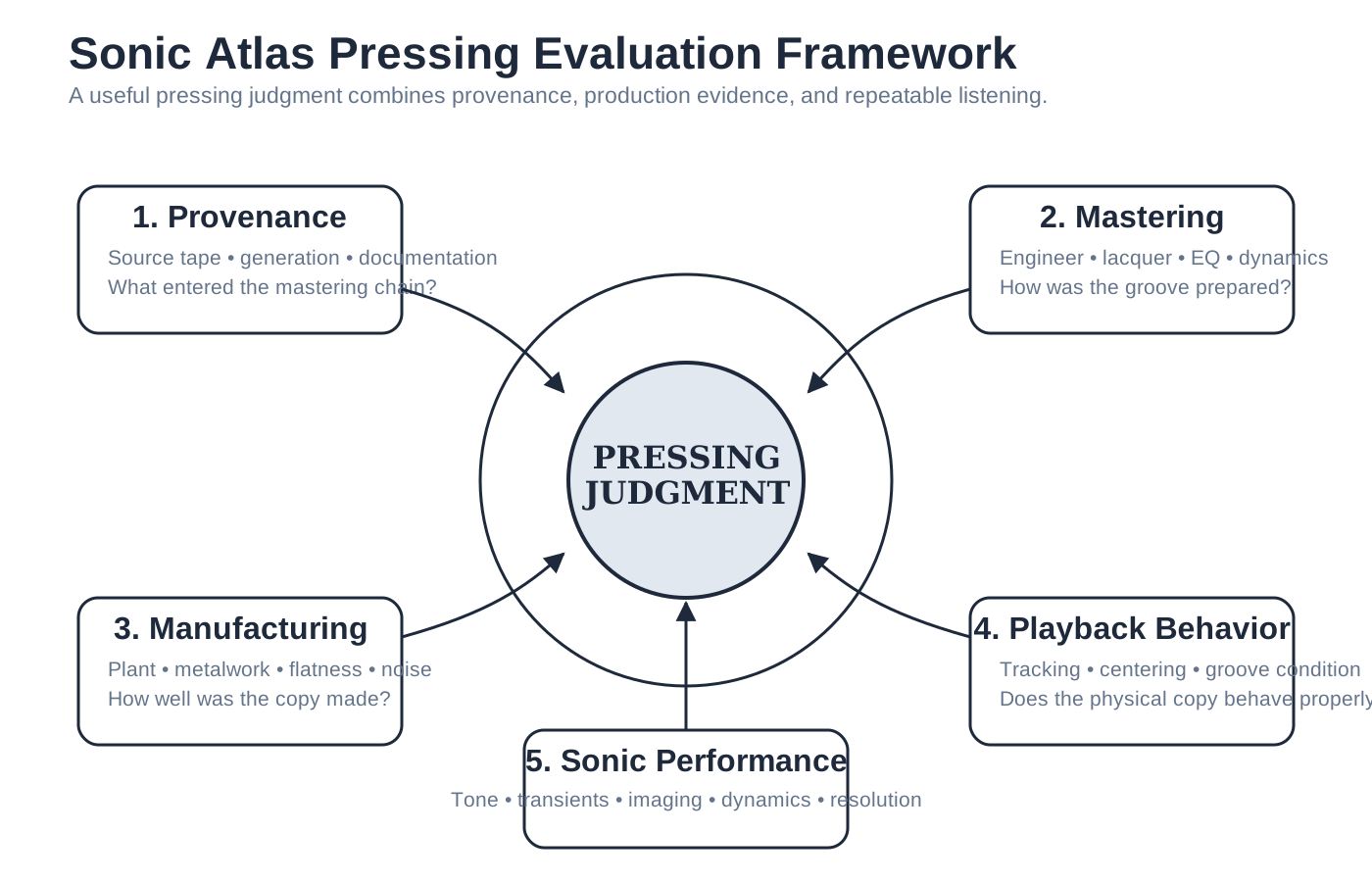
At Sonic Atlas, a pressing is best evaluated as the sum of several layers rather than by reputation alone:
- Provenance — What source appears to have been used? Is the mastering lineage documented or inferable?
- Mastering — Who cut it? Does the dead wax reveal a known engineer or facility? Are there identifiable lacquer variants?
- Manufacturing — Where was it pressed? Is the copy flat, centered, quiet, and free of obvious defects?
- Playback Behavior — Does it track cleanly? Are vocals stable? Does inner-groove performance remain controlled?
- Sonic Performance — We listen for tonal balance, transient realism, bass articulation, image stability, soundstage depth, dynamic scale, low-level resolution, and the sense that the recording has become less mechanical and more physically present.
- Context — The pressing should be compared with other known versions whenever possible. A five-star reputation attached to a catalog number is less useful than a direct comparison performed under controlled conditions.
9. Real Records Make Better Evidence Than General Rules
This is where collecting becomes interesting. A copy of Heart's Dog & Butterfly bearing KENDUN markings can offer clues about the mastering lineage before the stylus touches the groove. A Scorpions Animal Magnetism pressing marked MASTERDISK with Howie Weinberg's initials gives us another piece of provenance. A Led Zeppelin III copy carrying Atlantic-style matrix information and plant-specific clues becomes a small manufacturing artifact as well as a record.
And different editions of Supertramp — compare the pressings of Crime of the Century and Breakfast in America — can demonstrate perhaps the most important principle of all: identical music does not guarantee identical reproduction.
These examples are more useful than blanket claims about originals, reissues, heavy vinyl, or country of manufacture. The record in front of us is the evidence.
10. How to Identify the Best Pressing of an Album
If you are trying to determine whether a particular copy is worth seeking out, use a repeatable process:
- Identify the exact catalog number and country.
- Record every marking from the dead wax on both sides.
- Note whether each marking is handwritten or stamped.
- Identify known mastering signatures or facility stamps.
- Determine the likely pressing plant.
- Compare the runout to verified release entries.
- Research whether alternate lacquer cuts exist.
- Separate mastering reputation from pressing condition.
- Compare copies on the same playback system whenever possible.
- Trust repeatable listening observations more than collector folklore.
The goal is not to fetishize matrix numbers. The goal is to understand what they tell us about how the record was made. For the complete framework, see How to Find the Best-Sounding Version of Any Album.
The Bottom Line
Different vinyl pressings sound different because they are different physical products. They may originate from different sources. They may be mastered by different engineers. They may use different lacquer cuts, metal parts, stampers, vinyl compounds, and pressing plants. They may also have accumulated radically different levels of wear during the decades since manufacture.
That complexity is precisely what makes record collecting so compelling.
The most useful question is not: "Is this album good?" Nor even: "Is this an original pressing?" It is: "Which physical version of this recording most convincingly reproduces the musical event?"
That is where the serious search begins — and where the dead wax becomes every bit as interesting as the label.
Related Reading
Keep Reading
Best Audiophile Vinyl Reissue Labels in 2026: Who Actually Makes the Best-Sounding Records?
We don't rank the packaging. We rank the records. A tier-based evaluation of Analogue Productions, Mobile Fidelity, Speakers Corner, Tone Poet, Impex, Intervention, and more — judged by mastering, pressing, and real-world listening.
Does 180-Gram Vinyl Sound Better? The Audiophile Myth Explained
Does 180-gram vinyl really sound better than standard vinyl? Learn what record weight actually changes — and why mastering, cutting and pressing quality matter far more.
Best Vinyl Pressing: How to Find the Best-Sounding Version of Any Album
Original pressing, remaster, reissue or audiophile edition? Learn how to use matrix numbers, mastering credits, pressing plants and Discogs to find the best-sounding vinyl pressing before you buy.
How to Read the Dead Wax: The Secret History Written in Your Record's Runout
Every vinyl record carries a forensic document in its runout groove. Learn to decode mastering engineer initials, pressing plant codes, stamper generations, and matrix numbers.