
Why Telefunken Tubes Are the Finest
Engineered perfection. Sonic excellence. Timeless legacy. Why Telefunken remains the benchmark by which all other vacuum tubes are measured.
For audiophiles, musicians, and engineers, the name Telefunken has become synonymous with the pinnacle of vacuum tube technology. From their rigorous engineering standards to their extraordinary sonic signature, Telefunken tubes represent the finest expression of what vacuum tubes can achieve.
“Telefunkens don't just make music sound good — they make it sound real.”
— Audiophile Enthusiast
01 — A Legacy of Engineering Excellence
Telefunken, a German engineering powerhouse founded in 1903, brought military-grade precision and obsessive quality control to audio tube production. During the 1950s and 60s, their tubes were built to the highest industrial standards, using carefully selected materials, tight component tolerances, and advanced manufacturing techniques.
The result: unmatched reliability, consistency, and performance.
02 — Superior Materials and Construction
Every element of a Telefunken tube was engineered for purpose:
- Getter Flash — Halo getter for maximum gas absorption
- Support Grid — Precision-formed for exact alignment
- Rugged Structure — Heavy-duty mica and posts for microphonic stability
- Thick Plates — Robust plate construction for long life and heat dissipation
- Tight Tolerances — Matched elements ensure low noise and consistent character
- Premium Pins — Gold-plated pins for superior conductivity and corrosion resistance
Built like precision instruments. Designed to perform. Built to last.
03 — The Telefunken Sonic Signature
What sets Telefunken apart is not merely construction quality — it is what that construction produces sonically. The Telefunken sound is immediately recognizable:
- Silky Smooth Highs — Extended, airy, and never harsh
- Rich, Weighty Mids — Natural and full of musicality
- Tight, Controlled Bass — Deep, articulate, and textured
- Expansive Soundstage — Holographic imaging and depth
- Low Noise Floor — Quiet backgrounds reveal nuance
Natural. Open. Musical.
That's the Telefunken sound.
04 — Consistency You Can Hear
One of Telefunken's greatest strengths is consistency. Matched pairs and quads sit within incredibly tight tolerances — so what you hear is what the engineer intended, every time.
| Tube Brand | Plate Current Variation (in matched pair) |
|---|---|
| Telefunken (NOS) | ±2% |
| Mullard (NOS) | ±5% |
| Sovtek (New Production) | ±15% |
| Modern Reissue | ±20% or more |
Lower variation = better balance, lower hum, and a more holographic stage.
05 — Built to Last — For Decades
Telefunken tubes are renowned for their longevity. Many NOS (New Old Stock) Telefunkens are still going strong after 50–60 years of faithful service. That's not just good engineering — that's engineering that's overbuilt in the best possible way.
Built to last. Made to perform.
06 — The Audiophile and Engineer's Choice
From high-end audio enthusiasts to professional recording engineers, Telefunken tubes are the gold standard. They are the preferred choice in reference preamps, mastering chains, guitar amps, and hi-fi systems where ultimate fidelity matters.

In the Studio
For transparency, detail, and accuracy

On Stage
For touch sensitivity, harmonics, and feel
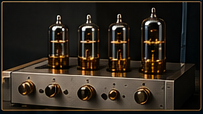
In Hi-Fi
For musicality, presence, and soul
The Conclusion: Nothing Compares

Telefunken tubes combine the best of German engineering, meticulous manufacturing, and musical artistry. They deliver a level of performance that modern production tubes rarely achieve — and once you hear them, it's hard to go back.
They're not just tubes. They're time machines that bring your music to life.
The Telefunken Difference:
- Uncompromising build quality
- Exceptional sonic performance
- Unmatched reliability and longevity
- Proven legacy in professional applications
- The benchmark by which all other tubes are measured
Hear the difference. Feel the music. Experience the legacy.
Keep Reading
What System Do We Use to Play Our Recordings?
A detailed look at the vinyl playback and ripping system behind Sonic Atlas — from a modified VPI Scout turntable to tube amplification and high-resolution digital capture.
Uriah Heep's Abominog on Vinyl: A Quieter Background, the Same Lean Argument
The 2015 180-gram Abominog reissue (BMGRM094LP) was bought to rescue a lean 1982 original's bottom end. It delivered exceptionally quiet surfaces and a nearly identical tonal balance instead — a case study in why pressing excellence and musical rehabilitation are separate findings.
Aja Breathes; Gaucho Merely Has Excellent Manners
Why Steely Dan's 1977 masterpiece Aja remains sonically preferable to its immaculately upholstered successor Gaucho. Gaucho is perfection completed; Aja is perfection kept alive.
Why Do Different Vinyl Pressings Sound Different? Mastering, Matrix Numbers & Pressing Plants Explained
Two records can contain the same album and still sound conspicuously different. Learn why mastering, lacquer cutting, metalwork, and pressing plants all leave an audible fingerprint on vinyl.