
Before Prince: The Strange Prehistory of Purple Rain
Two words, twelve years, and the inconvenient difference between an antecedent and an explanation.
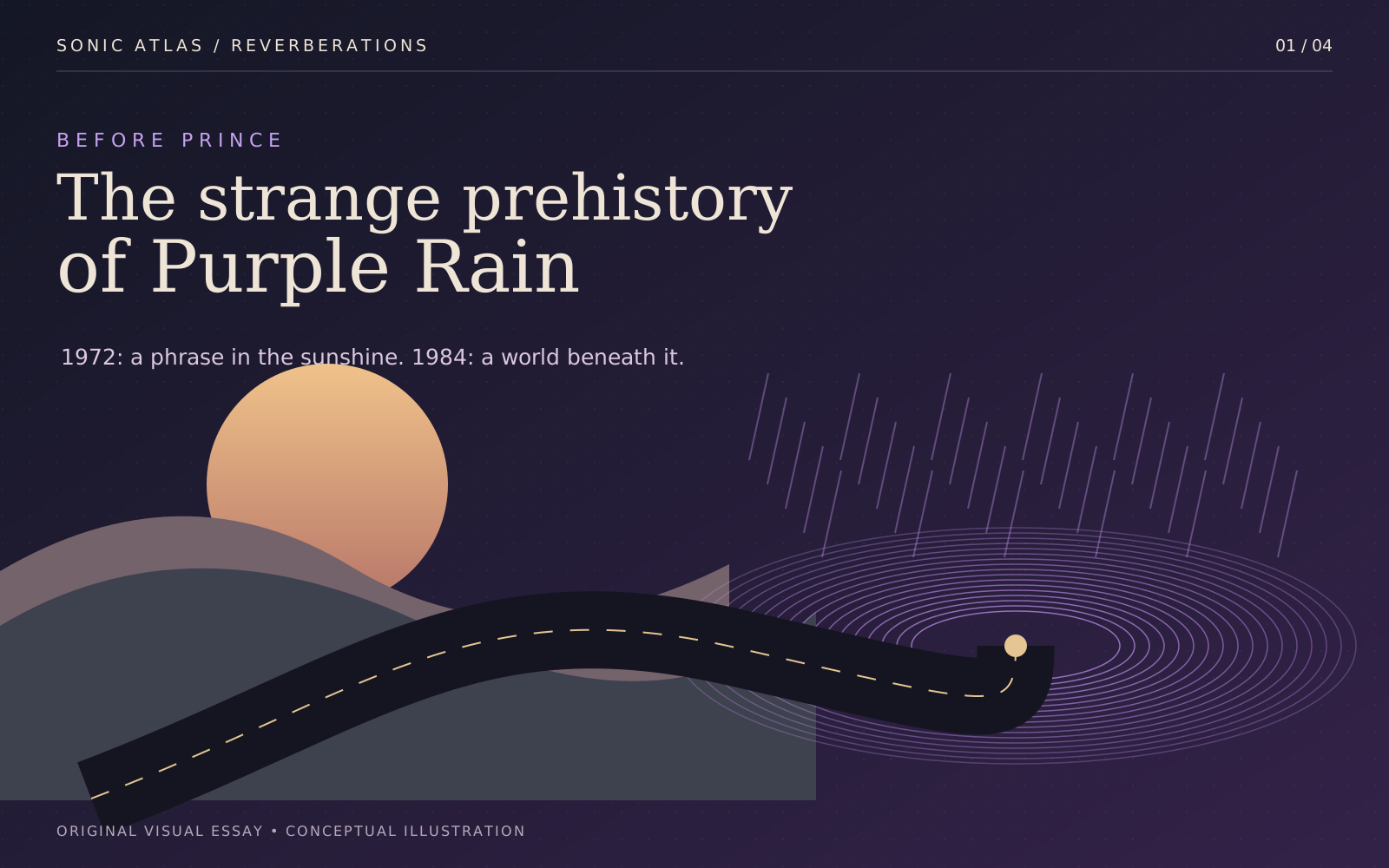
Before purple rain became a cathedral, it was a passing disturbance on the road to California. In 1972, America tucked the phrase into “Ventura Highway,” a song whose acoustic guitars seem capable of lowering blood pressure without medical supervision. Twelve years later, Prince made those same words the name of a song, an album, a film, and a cultural dominion. The coincidence is irresistible. The temptation to convert it into a documented transaction should nevertheless be resisted. Music history already contains enough confident nonsense to furnish several university departments.
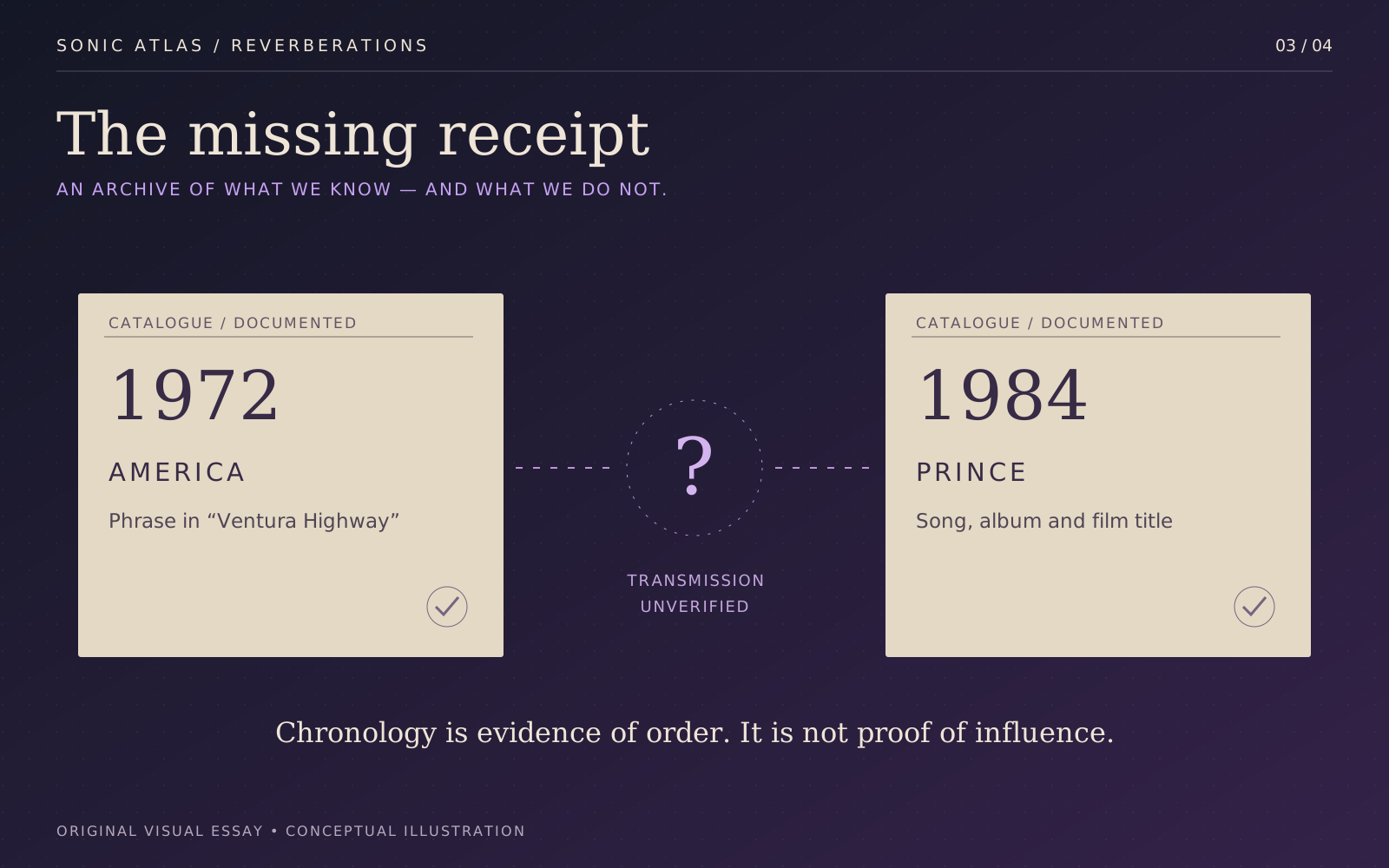
Here is the defensible proposition: America used the phrase before Prince’s famous work. Here is the unproven one: Prince obtained his title from America. Between them lies the interesting territory—memory, atmosphere, transformation, and our peculiar insistence that every artistic thunderstorm must have a traceable supplier.
I. California, composed at a distance
“Ventura Highway,” written by Dewey Bunnell and released on Homecoming in 1972, belongs to that class of records routinely mistaken for uncomplicated because they are enjoyable. Its ease is an achievement, not an absence of thought. The guitars move with conversational grace; the voices suggest companionship without crowding the scenery. Everything appears to be heading somewhere better. One suspects that even the traffic would have excellent manners.
Bunnell’s account complicates the postcard. He sketched the song in England, drawing on childhood memories of California. A roadside stop during a family journey, and the sight of a Ventura sign, supplied part of its imaginative geography. The famous guitar figure emerged through Gerry Beckley, with Dan Peek adding the harmony part.[1]
Distance matters. This is California recollected and desired, rather than California filed as a municipal report. Pop music’s most persuasive places are often constructed from absence. The destination acquires luminosity because the singer is elsewhere. The road becomes a promise before it becomes a piece of infrastructure.
Then the weather changes.
II. The bruise inside the sunshine
America’s lyric includes the words “hit by purple rain.” We need no larger quotation to establish the historical point. The phrase is there, in plain hearing, years before Prince’s 1984 phenomenon. “Ventura Highway” also reached number eight on the Billboard Hot 100; this was hardly an image concealed in an unreleased basement rehearsal.[2]
Yet the phrase is not merely psychedelic upholstery. Bunnell explained it as the older character’s reason for declining the adventure: something troubling has happened. He suggested a disturbing psychedelic experience or depression as possible meanings.[1] The sunny record contains a person who cannot quite consent to its sunshine.
That tension gives the song more emotional substance than its reputation as agreeable driving music allows. One voice imagines departure; another carries the accumulated weight of staying. Youth treats reinvention as an available service. Experience wonders about the small print. The record permits both attitudes to occupy the same bright afternoon.
Purple is an especially effective intrusion because it refuses the ordinary shorthand. Blue sadness arrives with its own explanatory leaflet. Purple is stranger: bruised, excessive, faintly regal, possibly chemical. Attached to rain, it turns private distress into impossible weather. A listener may not translate it precisely, but translation is hardly the only function of language. Sometimes an image succeeds because it cannot be reduced without losing its charge.
III. The missing receipt
Did Prince hear it? He could have. Did he remember it? Perhaps. Did that memory produce his title? This is where the evidence stops cooperating with the headline.
Asked directly, Bunnell said he had no knowledge that Prince took the phrase from him, although he considered it possible and liked the idea. He also said they never met.[1] That is a generous response, and a remarkably useful limit. The songwriter himself does not supply the certainty that later retellings are so eager to manufacture.
An earlier occurrence establishes chronology. It does not establish transmission. Even demonstrating that someone heard a record would not disclose what happened inside his imagination a decade later. Deliberate borrowing, unconscious recollection, and independent invention can leave superficially identical footprints. Scholarship becomes rather less impressive when it mistakes footprints for a signed confession.
Nor does this investigation establish that America invented the expression across all songs, poetry, or ordinary speech. It establishes a prominent earlier musical use. The narrower claim is sufficiently interesting. It has the additional advantage of being supportable.
The connection, then, is real at the level of language and unresolved at the level of influence. That distinction does not spoil the story. It rescues the story from the tiresome machinery of the revelation industry, where every resemblance must become a secret and every secret must explain a masterpiece.
IV. A phrase acquires architecture
Whatever the title’s private route into Prince’s imagination, the resulting music needs no borrowed explanation for its power. “Purple Rain” was performed at First Avenue in Minneapolis on August 3, 1983, during a benefit for the Minnesota Dance Theatre. That performance supplied the foundation of the familiar recording, subsequently edited and supplemented in the studio.[3] The Prince estate likewise identifies the concert as the live source of several album tracks.[4]
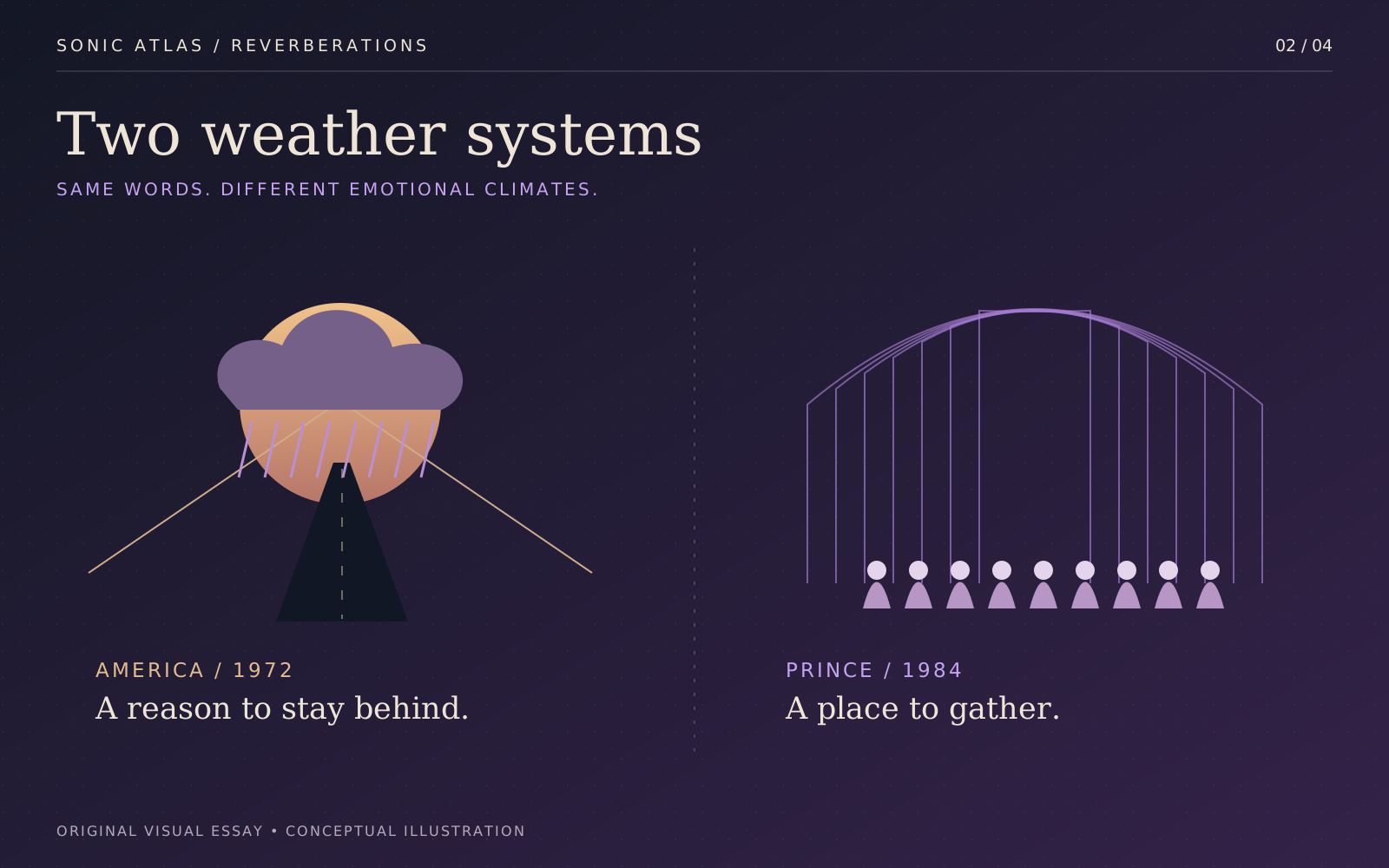
This matters because the song’s grandeur is not simply a studio illusion. There is a band inside it, and an occasion. Its spaciousness feels inhabited. Where America’s arrangement suggests movement across open country, Prince’s encourages a gathering: stay here, endure this, let the emotion become large enough to accommodate everyone.
Listen to the contrast in musical scale. “Ventura Highway” makes intricacy feel weightless. Its guitar figures remain buoyant, carrying the listener forward through their interlocking motion. “Purple Rain” makes repetition consequential. The returning harmony becomes a place where the vocal can plead, the guitar can expand, and time can appear to slow without the performance becoming inert.
The guitar solo is crucial to that enlargement. It does not merely decorate an argument already completed by the words. It continues the argument after speech has exhausted its useful vocabulary. Sustain, space, and the pressure of a held note become expressive resources. Anyone can purchase distortion. Making a note feel as though it has survived something is a different qualification entirely.
These are critical impressions, not evidence of compositional descent. The contrast is precisely what makes the pairing worthwhile. Shared language has produced radically different musical environments.
V. From local weather to collective shelter
In America’s song, the unusual rain helps explain why someone will not leave. In our reading of Prince’s performance, it becomes an emotional condition through which people might remain connected. The first image interrupts an invitation. The second grows into an invitation of its own.
That is interpretation, not a decoded message from the composer. The record supports sorrow, reconciliation, spiritual yearning, and communal release without requiring the listener to select one approved meaning. Its ambiguity is productive. A phrase can become universal precisely because it declines to specify everybody’s circumstances.
Prince’s achievement also extends beyond the individual recording. The 1984 album and accompanying film gave the title a visual and dramatic world.[4] Violet ceased to be merely an adjective and became a way of recognizing an artist’s territory. The words accumulated faces, clothes, gestures, light, and memory. Few song titles achieve that degree of cultural saturation. Fewer still retain their emotional force beneath it.
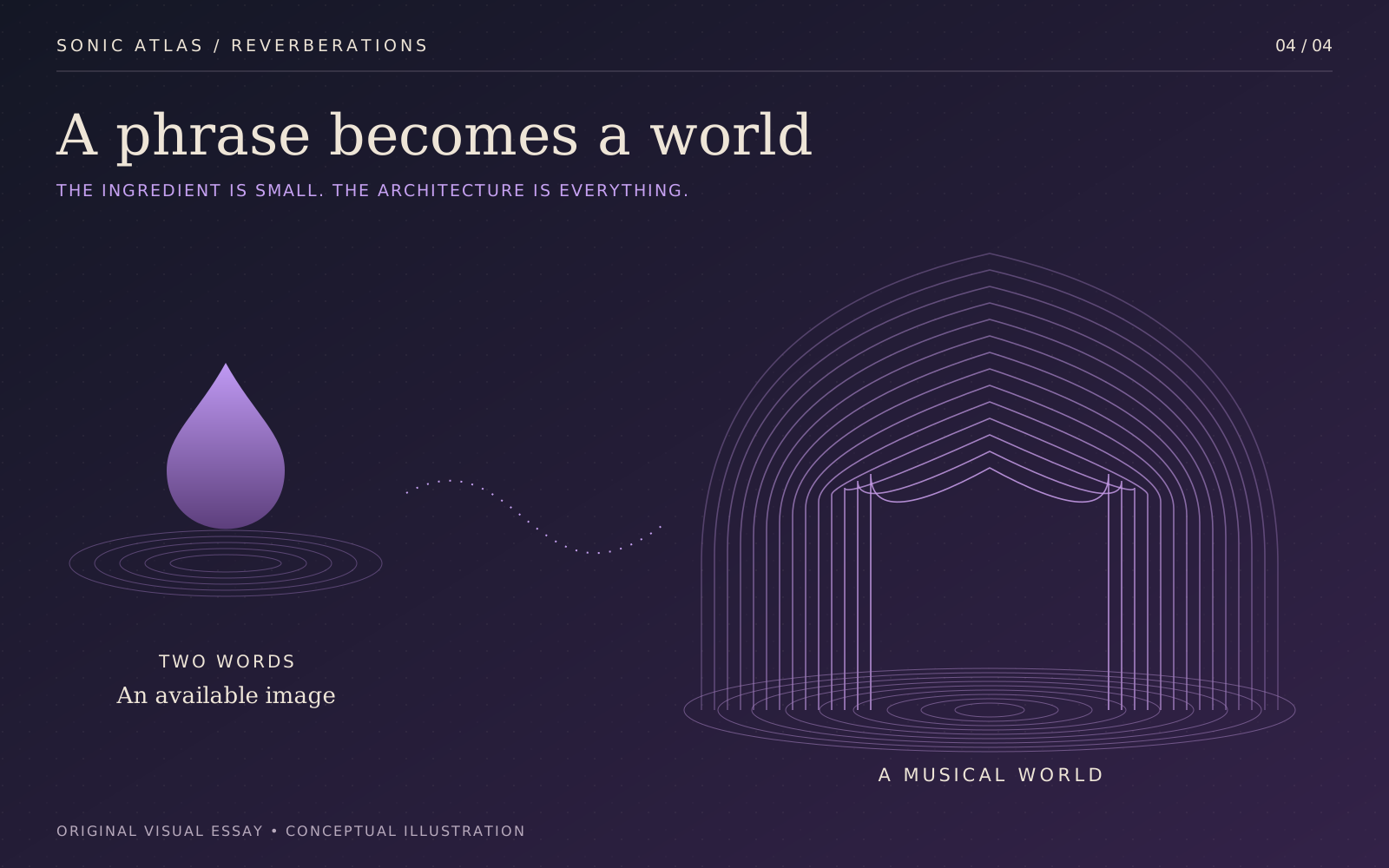
The familiar origin question therefore risks becoming too small for its object. Even if direct borrowing were eventually documented, it would explain the availability of two words. It would not explain the patience of the arrangement, the expressive authority of the singing, or the guitar’s ability to make excess feel necessary. A source is not an accomplishment. Discovering where a sculptor obtained the marble does not explain the sculpture.
VI. What survives the correction
Play the records together and the reward is not the thrill of catching Prince out. It is hearing how thoroughly context remakes language. America gives us a passing shadow within a beautifully sustained fantasy of escape. Prince gives us a vast chamber in which longing can become public without becoming impersonal.
Neither work needs to diminish the other. Bunnell’s image gains interest when restored to its own dramatic purpose. Prince’s gains nothing from the claim that every ingredient arrived without precedent. Originality is not the historical absence of ingredients; it is the force of their organization.
There is pleasure, too, in allowing a familiar record to become unfamiliar again. Once the phrase catches your ear, America’s sunshine acquires a shadow you may previously have missed. Return to Prince afterward and the scale of his reinvention feels larger, even while its alleged source remains uncertain.
So let the earlier rain remain audible. Let the possible influence remain possible. The sensible listener can accommodate both admiration and an unresolved footnote.
Before Prince, purple rain was already falling in popular song. After Prince, the phrase carried a world. Whether he first encountered those words on America’s highway remains uncertain. What he built beneath them does not.
Sources and editorial notes
- Paul Zollo, “Behind the Song: ‘Ventura Highway’ by America,” American Songwriter, June 6, 2020. Direct interview with Dewey Bunnell; principal source for his memories, the guitar arrangement, his explanation of the phrase, and his explicit uncertainty about Prince. Read the interview.
- “Ventura Highway,” reference overview. Used for release context and the Billboard Hot 100 peak. Its reports of earlier journalists asserting a Prince connection do not themselves establish that connection. Read the overview.
- “Purple Rain” song history. Used for the August 3, 1983 benefit date and the live recording’s subsequent editing and overdubs; the entry identifies underlying recording-history sources. Read the recording history.
- The Prince Estate, official Purple Rain discography. Confirms the 1984 release, the First Avenue live origins, band personnel, and the album/film context. Read the official entry.
Editorial distinction: the America phrase predates Prince’s 1984 release, but direct influence is unconfirmed. This essay makes no claim that America coined the expression. Descriptions of musical effect are criticism; the illustrations are original conceptual art, not documentary images or measured audio analysis.
Keep Reading
Beyond Maiden: A Beginner's Atlas of the NWOBHM Underground
The first NWOBHM guide introduced the monuments. This one maps the machinery beneath them: Tank, Persian Risk, Fist, Satan, Jaguar, Mythra, Witchfinder General, and the gloriously unstable British metal underground that taught the next generation how to move faster.
The Authority of Absence: The Caesura in Progressive Rock
Progressive rock defends its right to play more notes than anyone requested — but its sharper achievement is knowing when to withhold them. How King Crimson, Yes, Rush, Genesis and others use the caesura to intensify an entrance, mark a boundary, and pivot into a new musical world.
The Voices Behind the Voice: The Greatest Soft-Rock Background Vocals of the 1970s
The Eagles perfected vocal precision. Little River Band made nostalgia communal. But 10cc's I'm Not in Love turned background vocals into the record's emotional architecture — the decade's most indispensable backing-vocal arrangement.
Phil Lynott and Donald Fagen: Two Masters of the Crooked Sentence
Thin Lizzy and Steely Dan sit in different filing cabinets, but their singers share one craft: conversational prosody. A comparative close reading of how Phil Lynott and Donald Fagen make disciplined arrangements sound like speech — and how phrasing builds a character syllable by syllable.