
The Voices Behind the Voice: The Greatest Soft-Rock Background Vocals of the 1970s
The Eagles perfected vocal precision. Little River Band made nostalgia communal. But 10cc's I'm Not in Love turned background vocals into the record's emotional architecture.
There is a peculiar injustice built into the term background vocal. It suggests upholstery: something tasteful installed behind the important thing, ensuring that the chorus arrives suitably furnished. This is an adequate description of mediocre records. Applied to the finest soft rock of the 1970s, it becomes a minor intellectual embarrassment.
The best supporting voices did not merely sweeten a melody. They supplied harmonic movement, rhythmic answers, emotional scale and a recording's identity. Sometimes they contradicted the singer they ostensibly supported. Remove them, and the music loses more than polish. It loses part of its argument.
The question, therefore, is not which group could assemble the prettiest chord. It is which recording made its background vocals most indispensable. That distinction separates a pleasant catalogue of harmony singers from a defensible critical judgment. And it leads, with considerable inevitability, to 10cc's “I’m Not in Love.”
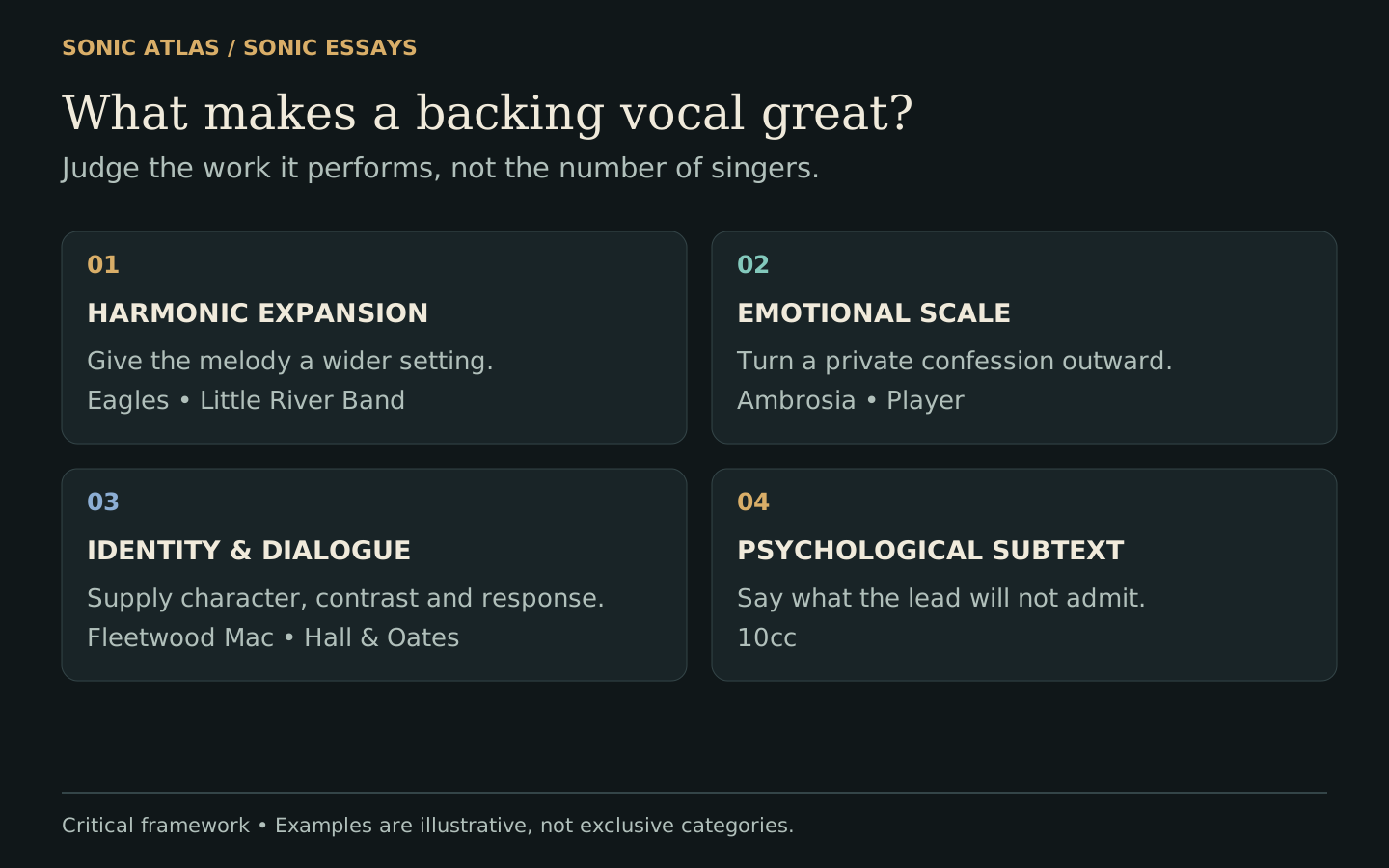
Figure 1. The criteria concern musical function. A large choir is not automatically a great arrangement; a quiet supporting part can be essential.
10cc: the background becomes the architecture
Released in 1975, “I’m Not in Love” makes the strongest case because its voices are not simply another layer. They establish the environment in which the song exists.
The technical method matters. The group accumulated overdubs of sustained pitches, made tape loops from the resulting vocal layers, and routed the notes through mixing-console faders. Raising those faders allowed chords to be performed from a bank of recorded voices. Kevin Godley's firsthand account describes the desk functioning as a playable choral instrument.[1]
This was ingenuity with a musical purpose. The familiar choir texture seems to float rather than arrive. Its edges are softened; its individual singers become difficult to distinguish. One hears human breath transformed into an enveloping harmonic field, simultaneously intimate and strangely disembodied.
Yet the decisive achievement is psychological. Eric Stewart's lead delivers a denial of romantic attachment. The atmosphere surrounding that denial is almost impossibly tender. His words maintain distance while the choir creates closeness. The arrangement supplies the admission the narrator cannot bring himself to make.
That is a critical reading, not a recovered production instruction. Nevertheless, it explains why the studio experiment remains emotionally persuasive. Technical novelty ages. The spectacle of someone losing an argument with his own feelings does not.
There is also a useful listening discipline here. Attend first to the lead, then redirect your attention to the surrounding voices without changing the volume. The accompaniment starts to feel less like support and more like an alternative account of the same emotional situation. This does not require a rare pressing or an extravagant playback chain. It requires abandoning the habit of treating everything outside the melody as furniture. A revealing system may clarify the layers, but the fundamental achievement belongs to the arrangement. The record invites two readings at once and makes their disagreement sound beautiful. That is a rather more substantial accomplishment than merely making a chorus bigger.
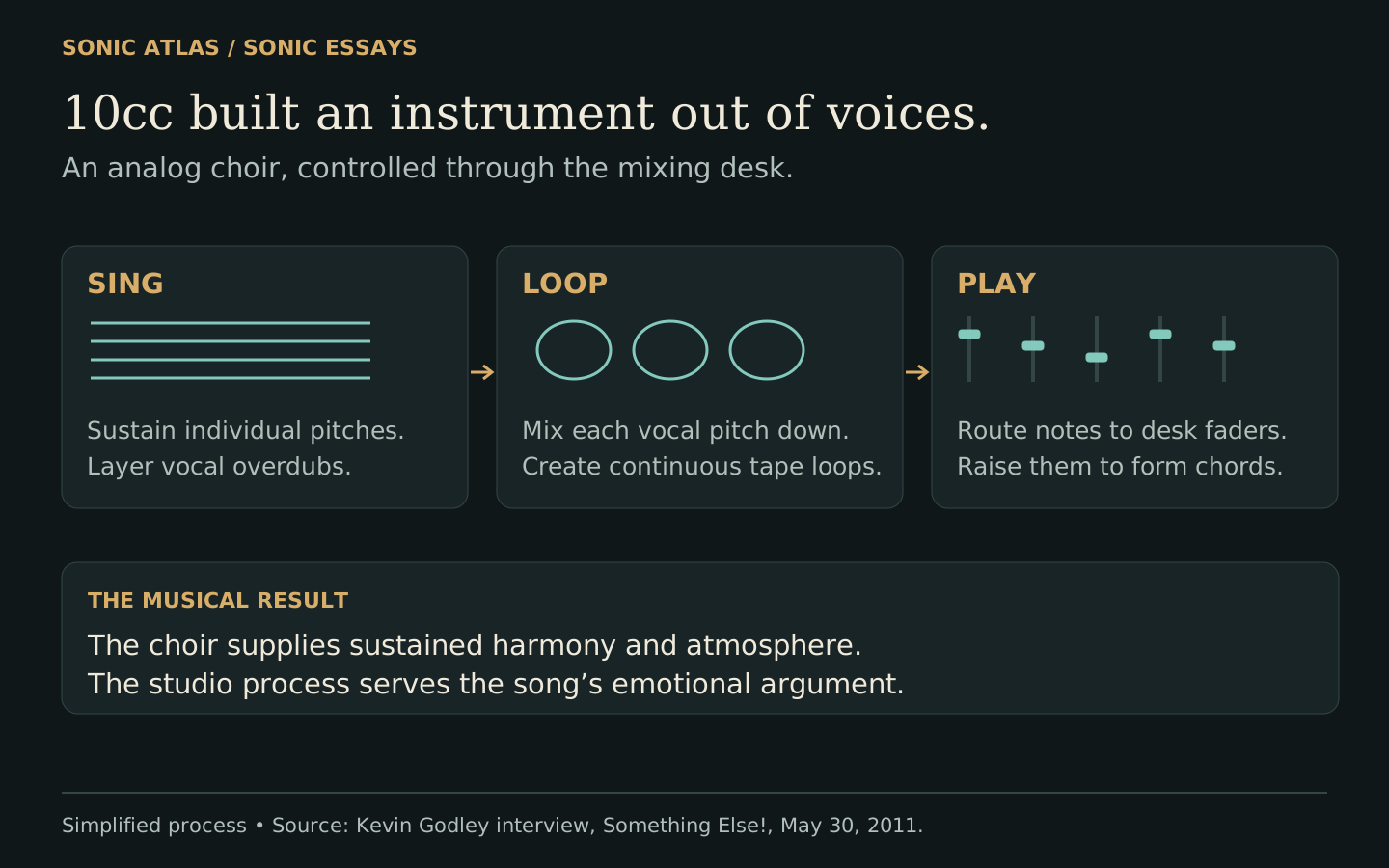
Figure 2. A simplified account of the tape-choir method. The essential innovation is turning recorded vocal pitches into a playable harmonic resource.
Eagles: precision that conceals its difficulty
The Eagles offer the most formidable conventional counterargument. On “New Kid in Town,” from 1976's Hotel California, vocal parts enter and withdraw with the discipline of orchestration. They support Glenn Frey without imprisoning him inside a permanently inflated chorus.
The recording's elegance lies in its changing relationships: reinforcement gives way to answering phrases, and the later passages allow supporting lines to acquire a life of their own. Complexity is present, but rarely advertised. Difficult singing has been made to sound like the only reasonable way the song could proceed.
The Recording Academy recognized the achievement with the vocal-arrangement Grammy at the 1978 ceremony.[2] An award does not settle an aesthetic dispute, but it confirms that the craft was noticed. The Eagles excel at arranging singers. 10cc's competing achievement is to make the singers become the room.
Little River Band: nostalgia arranged in three dimensions
Little River Band's “Reminiscing,” from 1978's Sleeper Catcher, offers a particularly persuasive alternative. Glenn Shorrock's lead tells the story; the harmonies give its remembered romance depth and movement. The ensemble passages make nostalgia feel inhabited rather than merely described.
Graeham Goble's affection for big-band music informed the song, but the vocal arrangement contributes its own sophistication. Supporting lines gather around the lead, then broaden into collective statements whose precision never freezes the performance. The transition from conversational storytelling to harmonized invitation is the point: recollection becomes an experience the listener can enter.
Goble later recalled that the harmonized passage was sufficiently complex that it remained in English when Shorrock recorded Spanish verses for another version.[7] That is a useful glimpse of the workmanship beneath the ease. Little River Band makes intricate singing sound sociable. Lesser arrangers would have demanded a certificate of appreciation before the second chorus.
Fleetwood Mac: identity through difference
On “You Make Loving Fun,” the achievement is almost the inverse. Christine McVie, Stevie Nicks and Lindsey Buckingham do not sound interchangeable. Warmth, grain and a brighter cutting edge coexist within the same vocal personality.
That difference gives the choruses dimension. The supporting voices frame McVie's lead while preserving enough character to make the blend immediately recognizable. It is ensemble identity without timbral anonymity.
A perfectly homogenized choir might sound smoother. It would also sacrifice the very friction that makes this combination interesting. The record demonstrates that vocal blend need not mean sanding every singer down to the same finish.
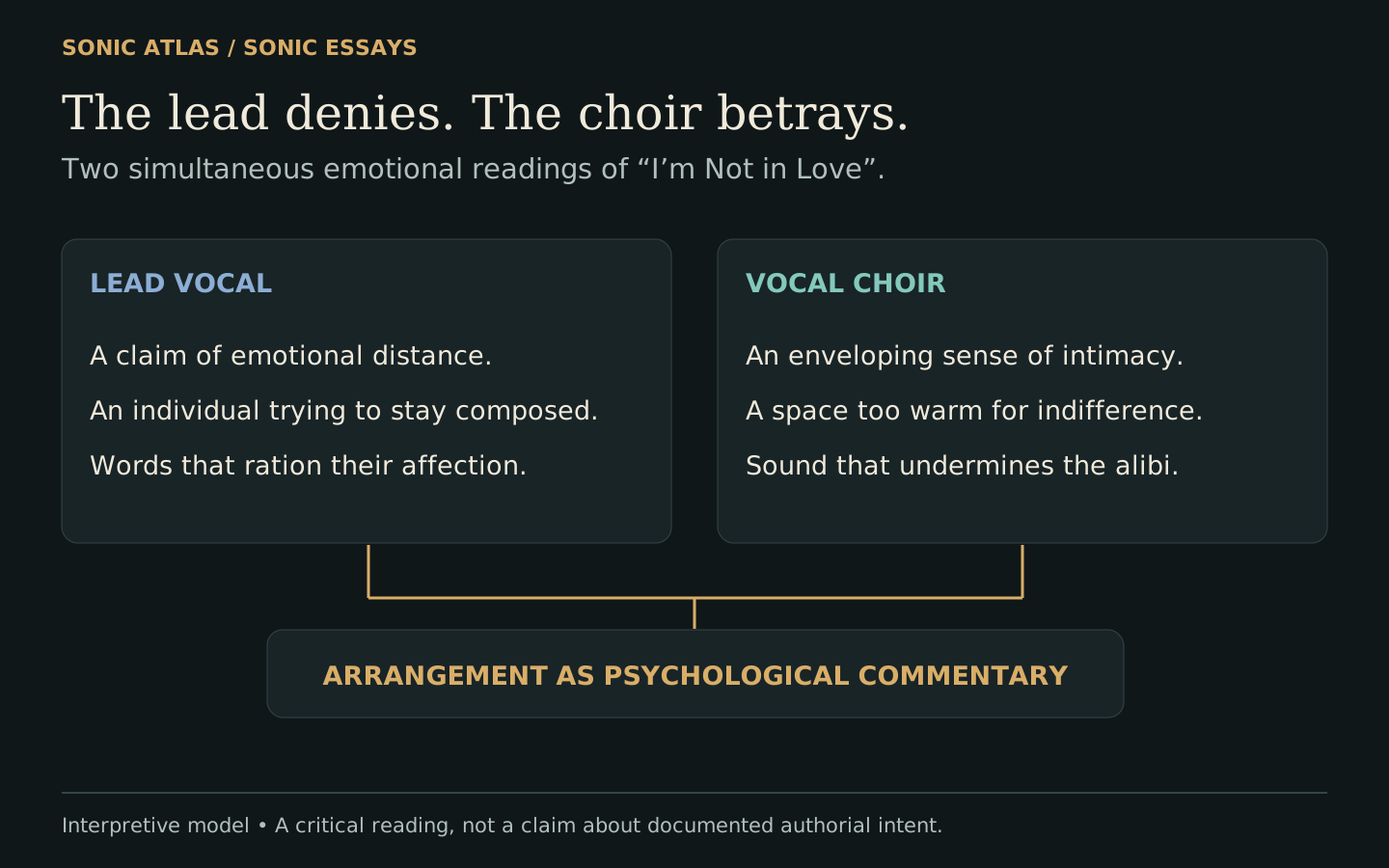
Figure 3. The essay's reading of 10cc: words and vocal atmosphere carry different emotional messages at the same time.
Ambrosia: the private confession expands
Ambrosia's “How Much I Feel,” released in 1978, deserves a place near the center of this discussion. David Pack's lead retains intimacy while the supporting harmony enlarges the emotional frame.[3]
This is one of soft rock's more demanding balancing acts. A chorus must become bigger without making its narrator suddenly sound less believable. Ambrosia achieves expansion through warmth and ensemble confidence rather than brute vocal display.
The supporting voices make an individual feeling seem shareable. They do not erase the person who feels it. That distinction separates emotionally articulate arranging from the familiar procedure of adding singers until somebody in marketing declares the result uplifting.
Hall & Oates: harmony as conversation
“She’s Gone,” originally on 1973's Abandoned Luncheonette, complicates the boundary between lead and support. Daryl Hall and John Oates create an exchange in which voices can answer, echo and intensify one another. Calling everything behind the principal line “background” becomes an administrative convenience.
Their soul vocabulary supplies dramatic movement. As the performance grows more urgent, the vocal interaction helps make that growth convincing. The arrangement does not merely become louder; it becomes more involved. We hear a conversation gathering emotional force, rather than a melody acquiring a larger entourage.
America and Player: two kinds of economy
America's “Sister Golden Hair” makes restraint sound easy. The supporting harmonies widen the song where widening is useful, then leave enough air for its conversational character. The 1975 recording, produced by George Martin, demonstrates that placement can matter more than abundance.[4]
Player's “Baby Come Back,” released in 1977, pursues a more concentrated form of economy.[5] Its chorus gathers harmony, melodic response and polished delivery into a memorable appeal. The backing voices help make the hook feel emotionally complete as well as immediately recognizable.
Neither recording needs to reinvent the studio. America makes the arrangement breathe; Player makes the chorus adhere. These are different achievements, and both require taste. Innovation is one possible route to greatness, not a compulsory entrance examination.
Paul Davis: the argument for quiet importance
“I Go Crazy” is essential precisely because its supporting voices do not attempt to become the attraction. Paul Davis's lead and harmonies, joined by engineer Ed Seay's backing contributions, serve a song about feelings that return despite attempts at composure.[6]
The voices provide shading rather than a parade. Their restraint keeps the emotional proportions credible: a private disturbance should not automatically summon a triumphant choir. The arrangement understands the difference between deepening a feeling and announcing it through a public-address system.
Davis thus supplies a useful corrective to the entire debate. Great background vocals need not dominate a recording. Their importance can reside in precisely how little they insist on being noticed.
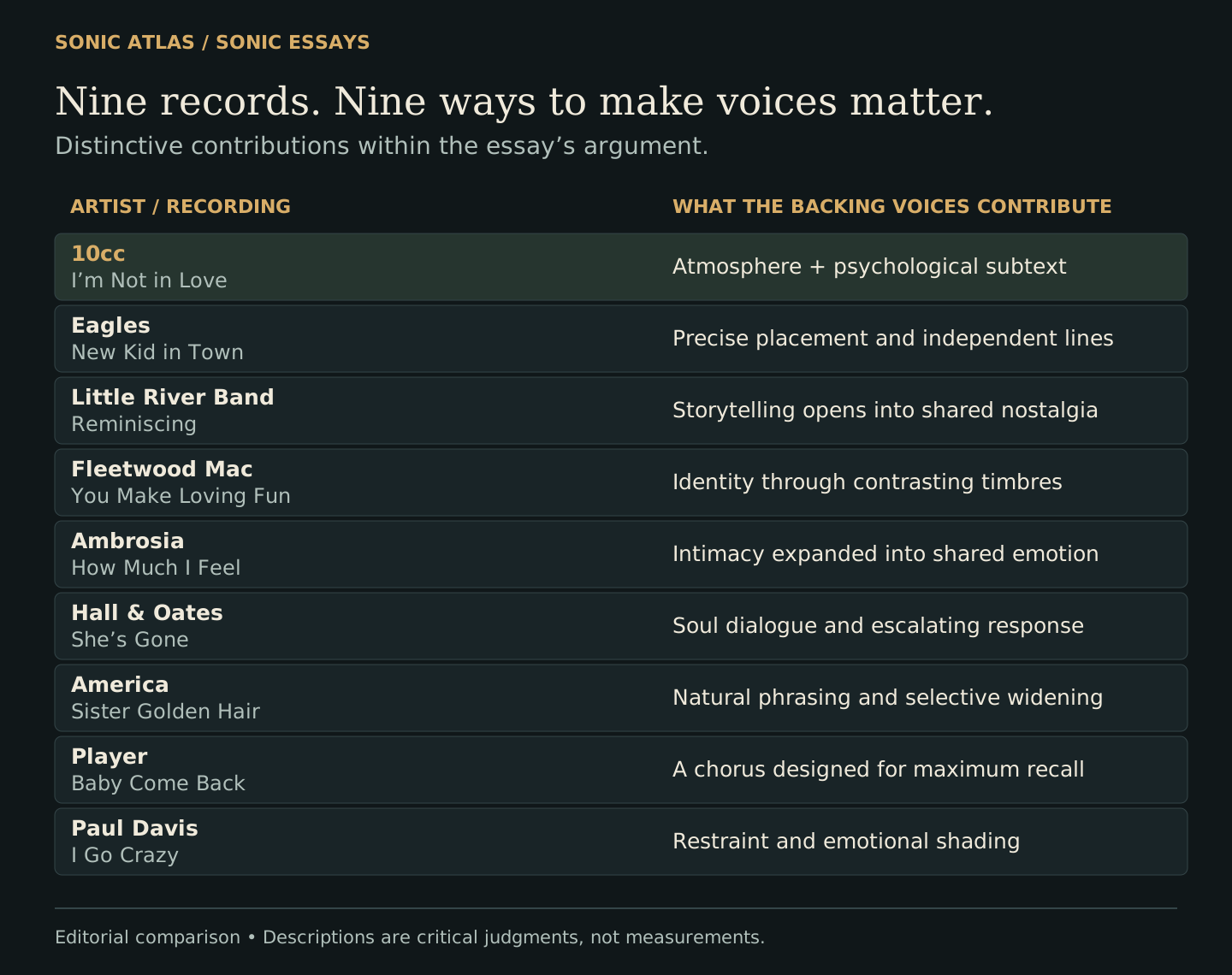
Figure 4. A qualitative listening map, not a scored ranking. The categories overlap; each description identifies a particular strength.
The verdict: indispensability, not acreage
The Eagles offer precision; Little River Band, communal warmth; Fleetwood Mac, personality. Ambrosia enlarges intimacy, Hall & Oates dramatizes it, America lets it breathe, Player concentrates it, and Paul Davis protects it from unnecessary decoration.
10cc wins under this essay's criterion because the choir performs several of those jobs while becoming the record's defining atmosphere. Its beauty is inseparable from its narrative function.
Consider a thought experiment, rather than an actual stem-removal test. Without the Eagles' harmonies, “New Kid in Town” would lose much of its richness. Without Little River Band's harmonies, “Reminiscing” would lose much of its communal warmth. Without Ambrosia's ensemble, emotional breadth would contract.
Without 10cc's choir, the song would still be writable and singable. But the familiar recording would lose its enveloping world and the contradiction at its heart. The narrator's denial would no longer have quite so formidable an opponent.
That is the distinction. The finest background-vocal arrangement of the decade does not win because it contains the most voices. It wins because the voices understand the song better than its narrator does.
A wider field: the decade's most impactful soft rock
It is worth stepping back from the narrow question of supporting voices to the broader one the whole essay has been circling. The arrangement that wins on indispensability is not necessarily the song that mattered most to the decade. Those are different measurements, and conflating them is how most “greatest” lists quietly cheat.
What follows is a separate editorial ranking: the twenty-five soft-rock recordings whose cultural staying power, songwriting and defining influence on the sound were, in our judgment, the greatest. Here “soft rock” is read generously, taking in its folk-rock and blue-eyed-soul borders, which is why James Taylor, the Eagles and Hall & Oates share a table with the Carpenters and Bread. Years mark the original release. The criteria reward impact, not intimacy of craft, so the two rankings disagree in instructive ways.
The disagreement is the useful part. “I’m Not in Love,” this essay's winner on backing-vocal architecture, sits at the bottom of the impact list rather than the top. “Reminiscing” and “I Go Crazy,” both praised above for what their voices do, appear here for quite different reasons. A song can define a craft without defining a decade, and the reverse is true just as often.
| # | Song | Artist | Year | Why it belongs |
|---|---|---|---|---|
| 1 | Your Song | Elton John | 1970 | Intimate piano songwriting elevated into an enduring pop standard. |
| 2 | Fire and Rain | James Taylor | 1970 | The defining marriage of acoustic warmth and deeply personal grief. |
| 3 | It’s Too Late | Carole King | 1971 | Adult emotional complexity delivered with extraordinary melodic ease. |
| 4 | Bridge over Troubled Water | Simon & Garfunkel | 1970 | Quiet reassurance rising into one of popular music’s great vocal performances. |
| 5 | Dreams | Fleetwood Mac | 1977 | Emotional distance, hypnotic rhythm, and remarkable cross-generational appeal. |
| 6 | If You Leave Me Now | Chicago | 1976 | Peter Cetera’s vulnerability and sumptuous arranging crystallize the soft rock ballad. |
| 7 | A Horse with No Name | America | 1971 | Spare, atmospheric folk-rock that became an emblem of the decade. |
| 8 | How Deep Is Your Love | Bee Gees | 1977 | Exquisite harmony singing and sophisticated melody beneath effortless gentleness. |
| 9 | We’ve Only Just Begun | Carpenters | 1970 | Karen Carpenter’s intimacy helped define the era’s softer musical vocabulary. |
| 10 | I Go Crazy | Paul Davis | 1977 | A beautifully controlled portrait of unresolved love; essential late-’70s soft rock. |
| 11 | Summer Breeze | Seals & Crofts | 1972 | Domestic contentment transformed into an instantly recognizable sonic atmosphere. |
| 12 | Without You | Harry Nilsson | 1971 | The soft rock ballad pushed to its operatic emotional limit. |
| 13 | Make It with You | Bread | 1970 | David Gates establishes a blueprint for tender, melodic romantic soft rock. |
| 14 | Wild World | Cat Stevens | 1970 | Acoustic simplicity carrying a complicated mixture of affection and farewell. |
| 15 | Just the Way You Are | Billy Joel | 1977 | Jazz-inflected sophistication brought into the mainstream romantic ballad. |
| 16 | Lyin’ Eyes | Eagles | 1975 | Country-rock harmonies serving an unusually complete, quietly devastating narrative. |
| 17 | Alone Again (Naturally) | Gilbert O’Sullivan | 1972 | Disarming melodic sweetness paired with startlingly bleak subject matter. |
| 18 | Hello It’s Me | Todd Rundgren | 1972 | Conversational vulnerability and soul harmony anticipate a richer soft rock language. |
| 19 | Sara Smile | Daryl Hall & John Oates | 1975 | Blue-eyed soul distilled into warmth, restraint, and an exceptional lead vocal. |
| 20 | What a Fool Believes | The Doobie Brothers | 1978 | Rhythmic and harmonic sophistication that helped define the genre’s next phase. |
| 21 | Baker Street | Gerry Rafferty | 1978 | Urban disillusionment wrapped in luxurious production and an indelible saxophone hook. |
| 22 | Sentimental Lady | Bob Welch | 1977 | The solo rerecording turns an intimate Fleetwood Mac song into polished radio gold. |
| 23 | Reminiscing | Little River Band | 1978 | Nostalgia, elegant harmony, and swing-era references woven into immaculate pop. |
| 24 | Year of the Cat | Al Stewart | 1976 | Literate storytelling and expansive arranging give soft rock cinematic scope. |
| 25 | I’m Not in Love | 10cc | 1975 | A studio-built cloud of voices turns emotional denial into a singular listening experience. |
Table 1. An editorial ranking, not a measured chart. It answers “which recordings mattered most,” a deliberately different question from the backing-vocal argument that occupies the rest of this essay.
Read the two together and a quiet point emerges. The craft that most rewards close listening and the songs that most shaped a decade are rarely the same records, and a catalogue earns its keep precisely by refusing to pretend otherwise. The Top 25 is where the soft rock of the 1970s announces itself; the backing-vocal argument is where it repays the attention.
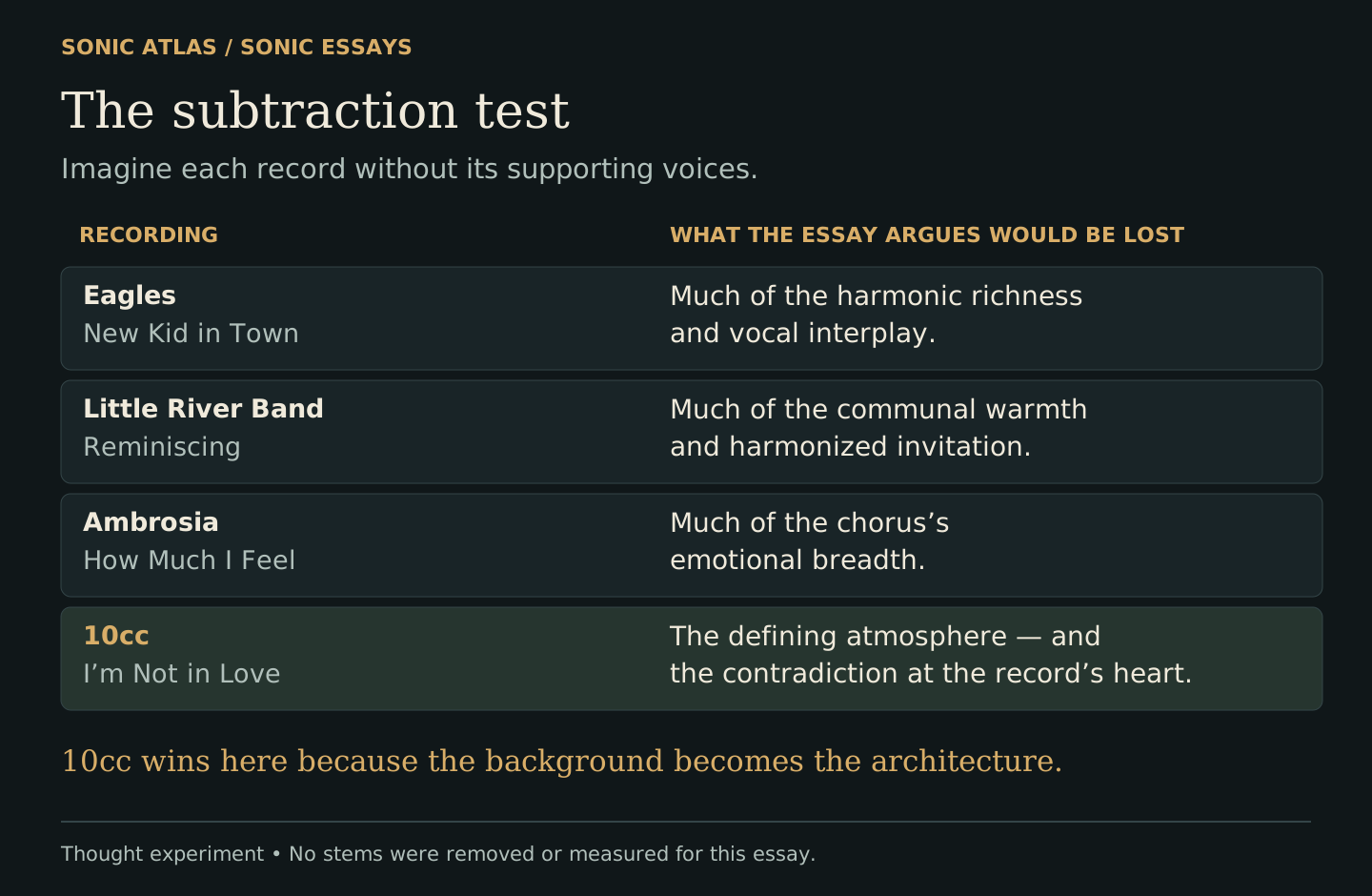
Figure 5. The subtraction test is a critical thought experiment. No isolated stems were removed or measured for this article.
Sources and listening notes
The comparative judgments and emotional readings above are criticism, not measured rankings. Recording history and factual details are supported by these references:
- Nick DeRiso, interview with Kevin Godley, Something Else!, May 30, 2011. Firsthand description of the overdubs, loops and fader performance. Retrospective accounts differ on exact vocal totals; this essay does not depend on a specific count.
- Recording Academy: Eagles, “New Kid in Town,” 1978 vocal-arrangement award.
- Rhino: Ambrosia's “How Much I Feel” and Life Beyond L.A.. Used for release context, not to support subjective listening judgments.
- America, “Sister Golden Hair”: release and production reference.
- Player: official original-band biography. Distinguishes the song's 1977 emergence from its 1978 chart peak.
- Robyn Flans, “Classic Tracks: Paul Davis’ ‘I Go Crazy’,” Mix. Recording account with Ed Seay's recollections; used for vocal contributions. Its introductory chronology contains an inconsistent 1978 date, so that date is not repeated here.
- Goldmine, “Reminiscing” with the Little River Band: interview with Graeham Goble. Firsthand discussion of the big-band inspiration and retention of the harmonized English passage in the Spanish-language version.
- Abandoned Luncheonette, Apple Music catalogue. Original 1973 album context for “She’s Gone.”
Keep Reading
The Authority of Absence: The Caesura in Progressive Rock
Progressive rock defends its right to play more notes than anyone requested — but its sharper achievement is knowing when to withhold them. How King Crimson, Yes, Rush, Genesis and others use the caesura to intensify an entrance, mark a boundary, and pivot into a new musical world.
Before Prince: The Strange Prehistory of Purple Rain
America sang about purple rain in 1972. Did Prince borrow the phrase? A closer listen separates the historical evidence from a much more interesting musical mythology — the inconvenient difference between an antecedent and an explanation.
Phil Lynott and Donald Fagen: Two Masters of the Crooked Sentence
Thin Lizzy and Steely Dan sit in different filing cabinets, but their singers share one craft: conversational prosody. A comparative close reading of how Phil Lynott and Donald Fagen make disciplined arrangements sound like speech — and how phrasing builds a character syllable by syllable.
The Case Against Coldplay: A Study in the Industrial Management of Risk
Not a band so much as a hedge. How the music industry solved for the stadium-anthem vacancy by installing its least volatile candidate — and what Radiohead, U2, and Oasis reveal about the choice. A Sonic Atlas essay.