
The Authority of Absence: The Caesura in Progressive Rock
On dramatic suspension, musical punctuation, and the considerable intelligence required to stop playing.
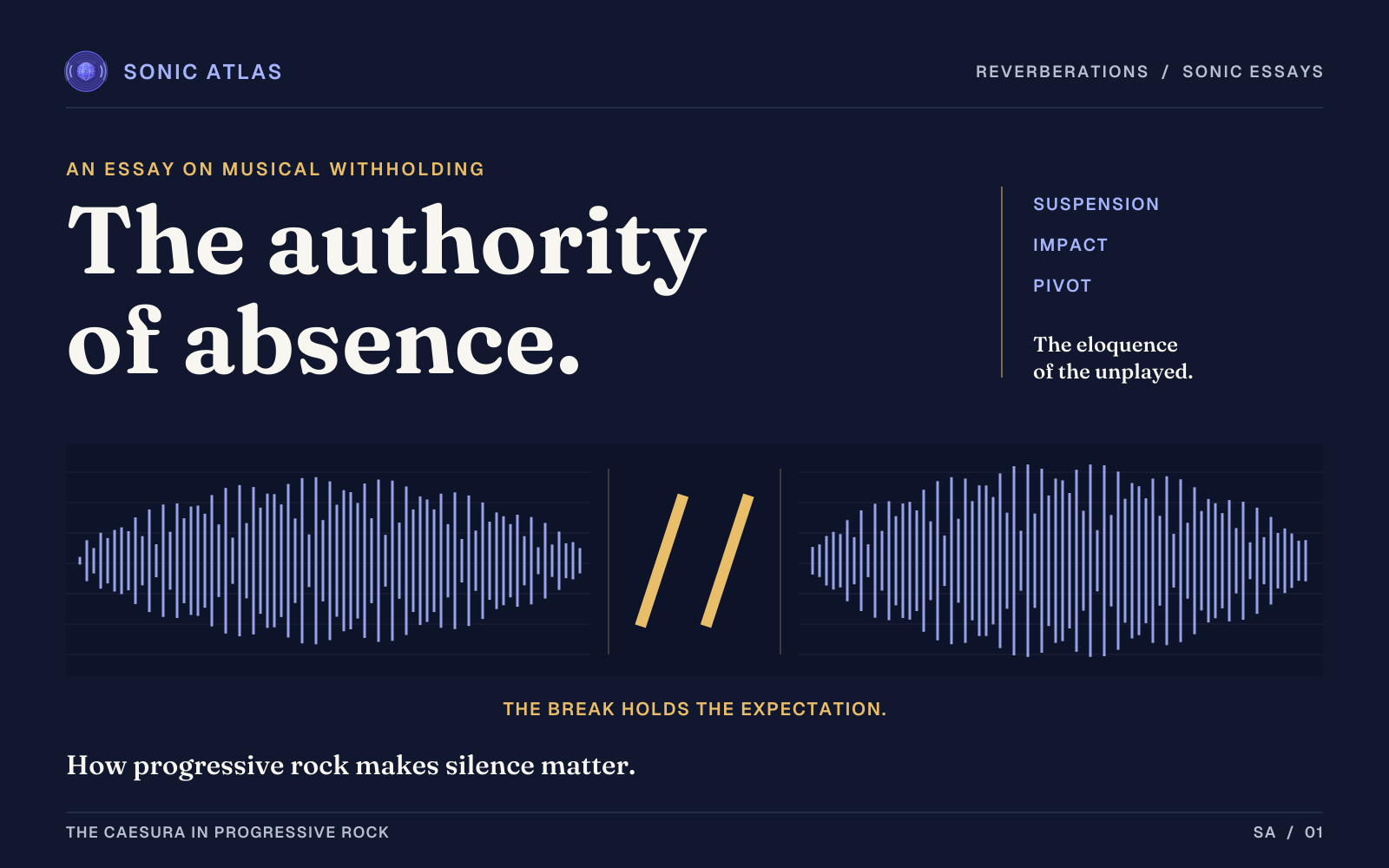
Progressive rock has spent half a century defending its right to play more notes than anyone requested. Its more interesting achievement, however, is knowing when to withhold them. A band that can negotiate thirteen subdivisions before breakfast may still possess the dramatic instincts of a photocopier. Virtuosity becomes composition when activity acquires consequence. The caesura, that deliberate interruption of musical flow, makes consequence audible. It gives an entrance weight, leaves an expectation unresolved, and permits a piece to change direction without dragging every previous gesture into the next room.
The argument has three parts. Interruption intensifies what follows, makes a boundary perceptible, and gives the listener an active role in sustaining continuity. These effects can coexist within a single passage. Their success depends less on the length of the gap than on the expectation established before it and the decision made upon returning.
I. A necessary distinction, before the faculty objects
In conventional notation, the caesura is commonly represented by two diagonal strokes: a cut across musical continuity, with its duration determined in performance rather than supplied by an ordinary note value.[1] A measured rest, by contrast, belongs to the continuing metre. Stop-time arrangements punctuate that metre with attacks and gaps; a false ending persuades us that the whole performance has concluded. These devices are related, but academic dignity requires that we decline to make them interchangeable.
This essay therefore examines the caesura alongside its close relatives. No claim is made that every recording discussed contains a printed caesura marking. The shared concern is dramatic interruption: what happens when musicians withdraw the sound upon which the listener has begun to depend. Silence becomes consequential because something has prepared us to expect its opposite. A gap without preparation is merely an interval between events; a meaningful break reorganizes their relationship.
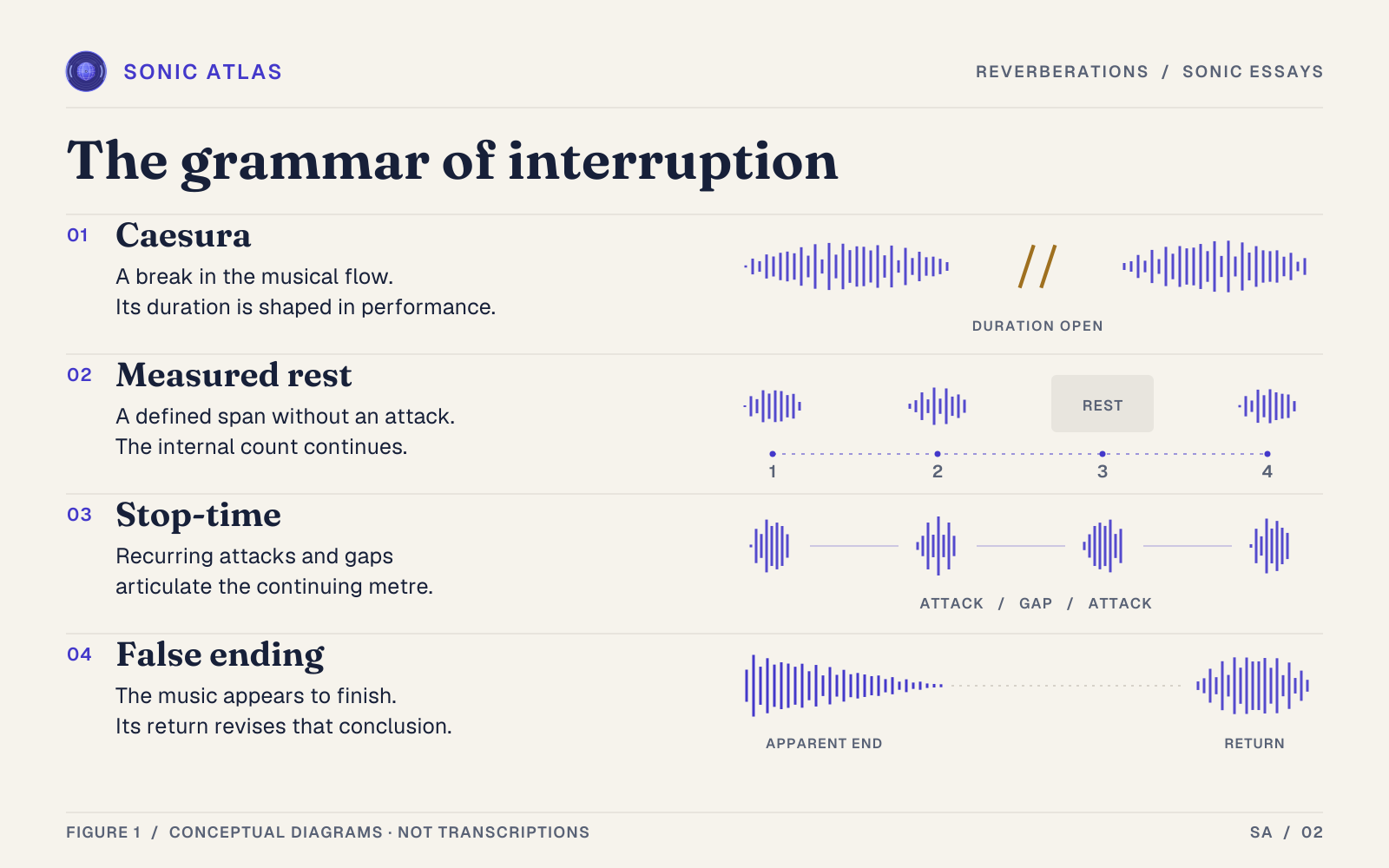
Figure 1. A vocabulary of interruption. These are conceptual diagrams, not transcriptions.
II. King Crimson: the discipline of the guillotine
The unison breaks in “21st Century Schizoid Man” establish the essential proposition. During the instrumental “Mirrors” passage, coordinated bursts are separated by abrupt withdrawals. The excitement resides in the relationship between the attack and its removal. Robert Fripp credited Michael Giles with proposing that the fast break be played in rhythmic unison: precision was fundamental to the conception.[2] The resulting silence has an edge. It makes the ensemble sound capable of switching an entire electrical district off with one gesture.
The title track of In the Court of the Crimson King pursues a different deception. Its apparent conclusion gives way to a quiet return and the final resurgence of the grand theme.[3] This is a false ending, with the pause serving as a theatrical hinge. We have begun filing the experience under “completed”; the music reopens the case. The return enlarges the composition by revising our understanding of its boundaries.
III. Yes: the pause as a change of perspective
“Heart of the Sunrise” makes interruption part of its recurring grammar. The opening material returns with stops that prevent its ferocity from settling into comfortable routine. Against that agitation, Jon Anderson's first vocal acquires startling delicacy. The instrumental force has prepared an exposed human entrance. Later starts and stops keep the relationship unstable, as though the song must repeatedly negotiate the distance between public spectacle and private uncertainty.[4]
“Awaken” offers a broader pivot. The break before its central, spacious development separates different experiences of movement. The ear relinquishes the earlier insistence and becomes available to atmosphere, resonance, and gradual accumulation. The essential point is that the pause changes the conditions under which subsequent sounds will be heard. Musical architecture depends on such thresholds. Even a cathedral needs a doorway; otherwise one has merely commissioned an unusually expensive wall.
A pivot need not announce a new key or time signature. It may alter density, scale, or emotional distance. The silence provides a joint at which these changes can turn. Without that articulation, contrast may register as an arbitrary splice rather than a persuasive transformation.
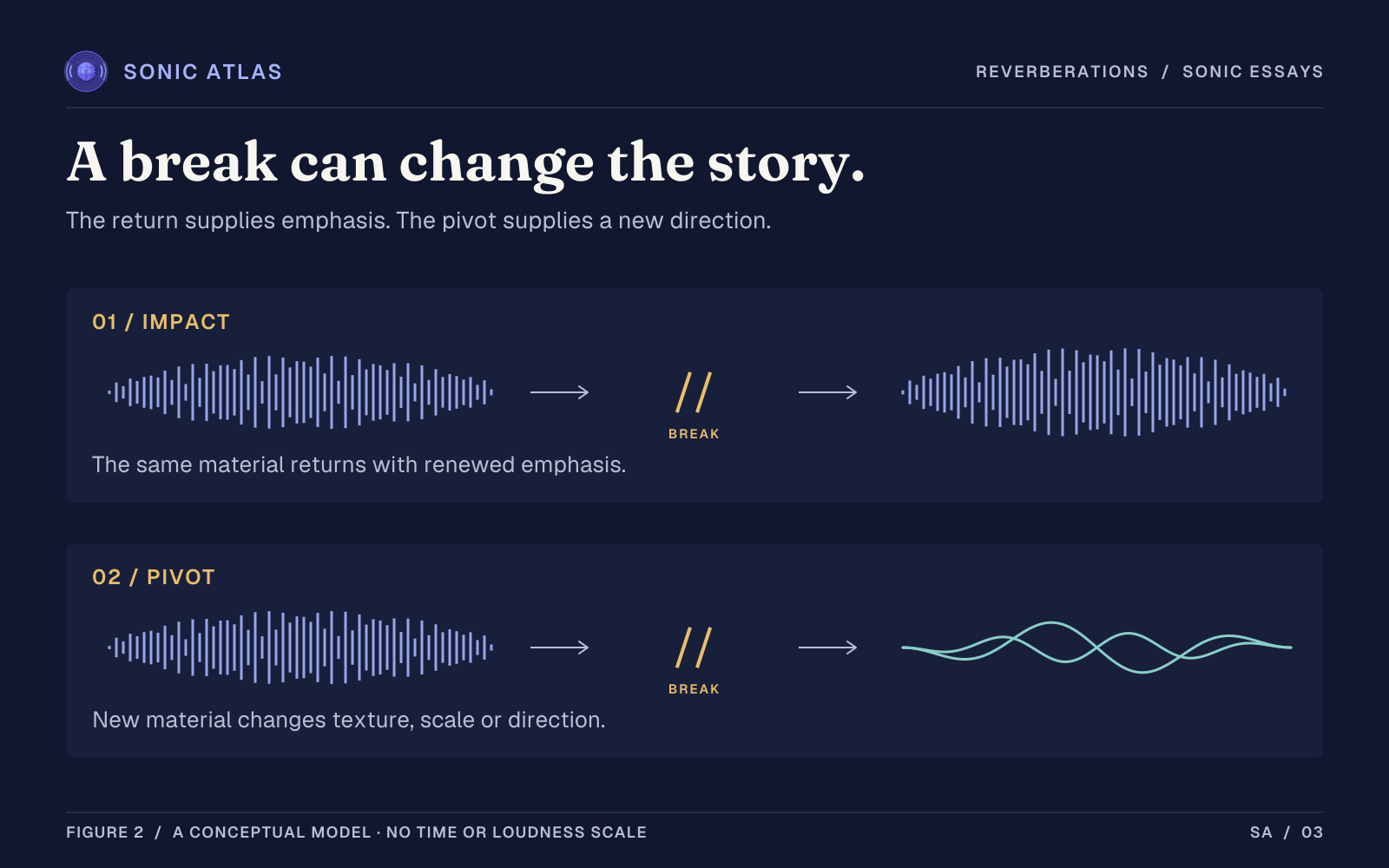
Figure 2. A break can intensify a return or prepare a pivot into different material.
IV. Rush: suspense with an internal clock
Rush demonstrate why measurable silence can feel dramatically suspended. After the Morse-code introduction to “YYZ,” a short ensemble rest separates that angular signal from the ensuing passage.[5] The count continues internally. The listener carries the pulse while the musicians temporarily stop supplying it, then experiences their return as both confirmation and release. The band has delegated a fraction of the performance to our anticipation.
The “Prelude” of “Cygnus X-1 Book II: Hemispheres” uses interruptions within its larger sequence of chordal declarations. Space allows those statements to retain identity instead of congealing into a continuous demonstration of competence. “Show Don't Tell” compresses the principle into a compact introduction: the early pause gives its syncopated riff additional definition.[6] Across these examples, restraint contributes to momentum. A rest can propel music because expectation continues across it; the silence inherits the energy of the phrase that stopped.
V. Genesis and Hammill: punctuation with consequences
Genesis make ensemble punctuation especially effective in the intricate instrumental writing of “Dancing with the Moonlit Knight.” Its stop-start construction articulates phrases whose detail could otherwise blur together.[7] Each cut helps the listener perceive shape within abundance. Complexity gains legibility when the arrangement admits a little air.
Van der Graaf Generator turn the device toward language. In “Childlike Faith in Childhood's End,” Hammill's treatment of the phrase “frightening in the silence” makes a pause dramatically specific. A documented live performance shows how strongly that suspension can engage an audience.[8] The interruption briefly stages the condition the words describe. Silence ceases to be neutral background and becomes part of the argument.
VI. Phish: the audience completes the interval
“Divided Sky” belongs here through Phish's composed progressive vocabulary. Its famous pause delays a resolving guitar note; live performances can stretch that suspension far beyond the studio scale. Accounts of Anastasio's approach describe the music continuing in his head while the audience responds in successive waves.[9] The unresolved phrase becomes a shared responsibility. Listeners occupy the interval with memory, prediction, and impatience. This is musical theatre conducted through withholding, and its success depends on the audience remembering what remains unfinished.
There is, inevitably, a point at which suspension becomes mere showmanship. Extending a pause cannot guarantee increasing tension. Once the listener abandons the unresolved phrase, anticipation has become waiting. The finest breaks preserve a live connection across the gap; theatrical excess merely tests the seating.
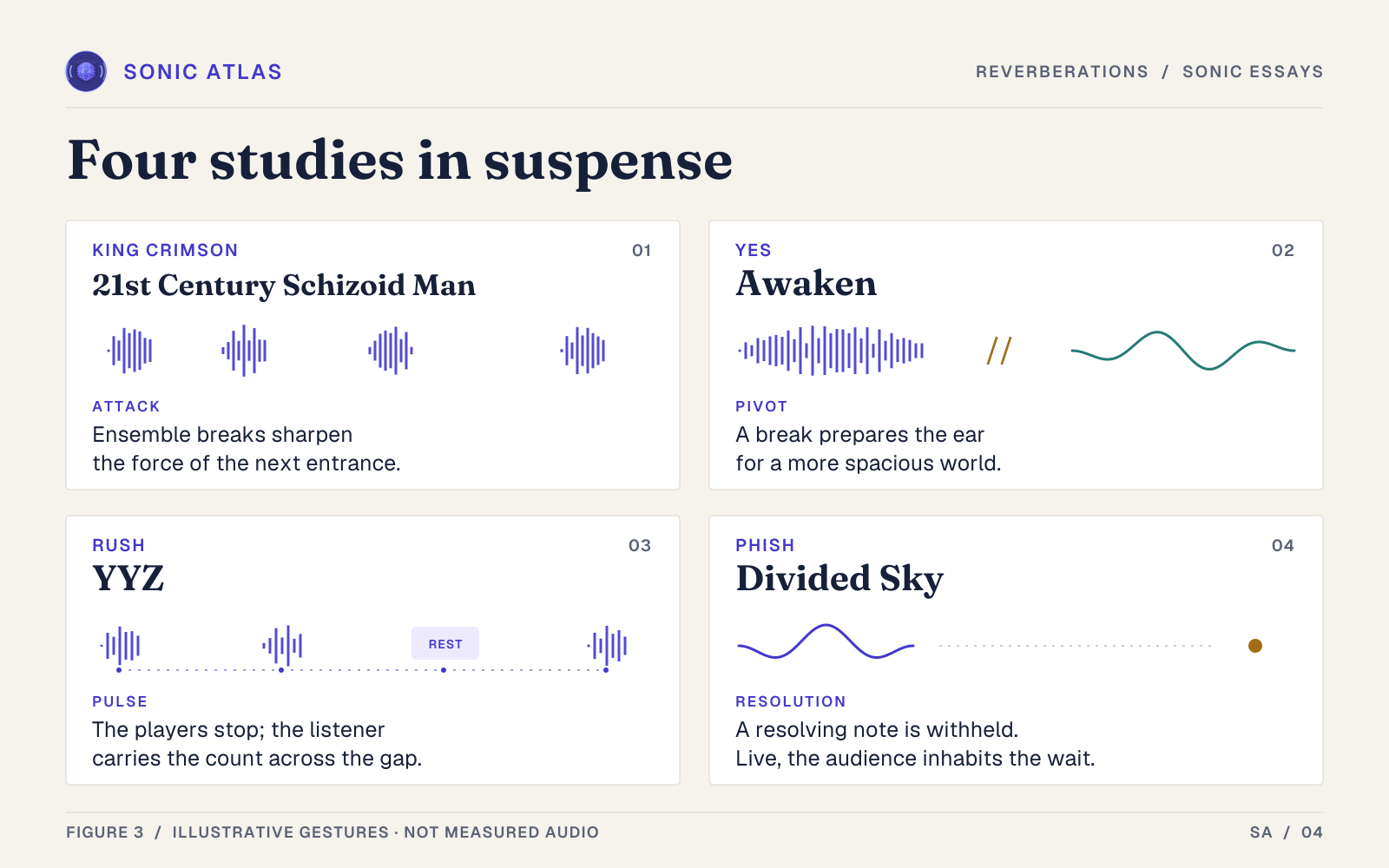
Figure 3. Four listening lenses. The musical gestures are illustrative, not measured audio.
VII. The reproduction of absence
For the serious listener, these distinctions also sharpen attention to playback. An ensemble stop may leave room reverberation, cymbal decay, tape hiss, or surface noise audible. Musical silence does not require digital zero. Nor does a black background prove that a pressing has preserved every transient. The useful question is whether the recording and system let us hear the relationship between the departing sound, its remaining space, and the returning attack.
Listen for whether that departure is cleanly articulated, whether its decay remains intelligible, and whether the return arrives with proportionate force. Avoid mistaking a louder replay for a better dramatic result. The composition establishes the relationship; faithful reproduction lets its timing and texture remain perceptible. Expensive equipment cannot supply a missing idea, though it can make an existing one easier to follow.
The caesura matters because it confers form upon attention. It can magnify an entrance, expose a voice, challenge a pulse, or authorize a change of world. Progressive rock earns its ambitions when these functions serve the piece rather than advertise the musicians. Anyone can fill a bar. The more demanding achievement is to leave one expectant. Silence, properly composed, is where technique finally acquires manners.
Notes and listening references
The discussion is critical interpretation, not a transcription study. Recording descriptions refer to the original album arrangements unless a live performance is expressly identified. The figures are original conceptual illustrations, with no measured waveforms, elapsed-time scale, or empirical suspense scores.
- Music Encoding Initiative, “Caesura”, on the interruption of normal tempo and its conventional diagonal-stroke symbol. See also Cambridge Dictionary, “Caesura.” The distinction from measured rests is standard notational usage. ↩
- Robert Fripp, “King Crimson 1969 — A Personal Throughview From the Guitarist,” DGM Live. Fripp attributes the rhythmic-unison treatment of the fast “Schizoid” break to Michael Giles. The dramatic reading here is the essay's interpretation. ↩
- Sputnikmusic, In the Court of the Crimson King, review, discussing the pause before “The Dance of the Puppets.” Consult the full original album track; abbreviated edits can remove structural context. ↩
- “The Yes Chronicles, Part 5: Fragile”, describing the recurring starts and stops of “Heart of the Sunrise.” “Awaken” is discussed here as a listening interpretation of the original Going for the One arrangement; it is not assigned a verified score marking or fixed pause duration. ↩
- Rush Wiki, “YYZ,” title and composition, identifying the short measured rest following the introduction. This is secondary structural commentary, not an authenticated published score. ↩
- Rush Vault, “Show Don't Tell: Background” , describing the early pause and reproducing Peart's discussion of the riff's syncopation and underlying groove. Album context for “Hemispheres”: Rush's official album page. The interpretation of its opening interruptions is not a claim about authorial intent. ↩
- G2, Selling England by the Pound background, reproducing Gabriel's account of detailed rehearsals of the stop-start penultimate section of “Dancing with the Moonlit Knight.” This is an archived quotation through a secondary host. ↩
- Victor Andrei Părău, Van der Graaf Generator in Rome, April 4, 2011, Fire of Unknown Origin, describing Hammill's pause and an audience response. This performance evidence does not establish a uniform studio or live duration. ↩
- Phish.net, “Divided Sky” history, documenting the pause before the resolving note and reporting Anastasio's descriptions of the continuing internal music and audience response. Phish is included as a progressive-rock crossover, not classified exclusively as a progressive-rock band. ↩
Keep Reading
The Canterbury Scene: A Cartography of English Eccentricity
A complete critical map of the Canterbury scene — from the Wilde Flowers and Soft Machine to Caravan, Gong, Hatfield and the North, National Health, the international diaspora, and the bands that merely borrowed the waistcoat.
Architecting the Steven Wilson Universe
How one obsessive English auteur turned progressive rock into a modular system of bands, alter egos, sonic laboratories, archival interventions and spatial-audio evangelism — mapped across Porcupine Tree, the side-project laboratories, the solo canon and the remix work.
The Progressive Rock Family Tree: How Yes, King Crimson, Genesis and the Entire Prog Genome Connect
A personnel-based map of progressive rock, from Yes, King Crimson, Genesis and ELP through Canterbury, U.K., Asia, neo-prog, Porcupine Tree, Dream Theater and the modern progressive ecosystem.
Best Rush Permanent Waves Vinyl Pressing: Which Version Sounds Best?
Over 200 versions on Discogs. The MASTERDISK HW inscription is the collector's signal — but can a modern Sean Magee remaster actually improve upon it? We compare originals, MoFi, and Abbey Road cuts.