
Vinyl vs. Streaming: Which Sounds Better on a Serious System?
On an ordinary Bluetooth speaker, it's a discussion about convenience and ritual. On a serious system, it becomes a contest between two complete reproduction chains — each capable of magnificence.
On an ordinary Bluetooth speaker, vinyl versus streaming is mostly a discussion about convenience and ritual. On a serious audio system, it becomes something far more interesting: a contest between two complete reproduction chains, each capable of magnificence and each carrying its own opportunities for failure.
The short answer is that neither format always sounds better. A first-rate lossless stream can equal or surpass an LP when both originate from the same master. A superb record can embarrass the streaming version when it was cut from a more dynamic or more sympathetic source. The decisive variable is usually not whether the music arrives through a groove or an Ethernet cable. It is which master you are hearing — and what happens to it before it reaches the loudspeakers.
Two Entirely Different Signal Paths
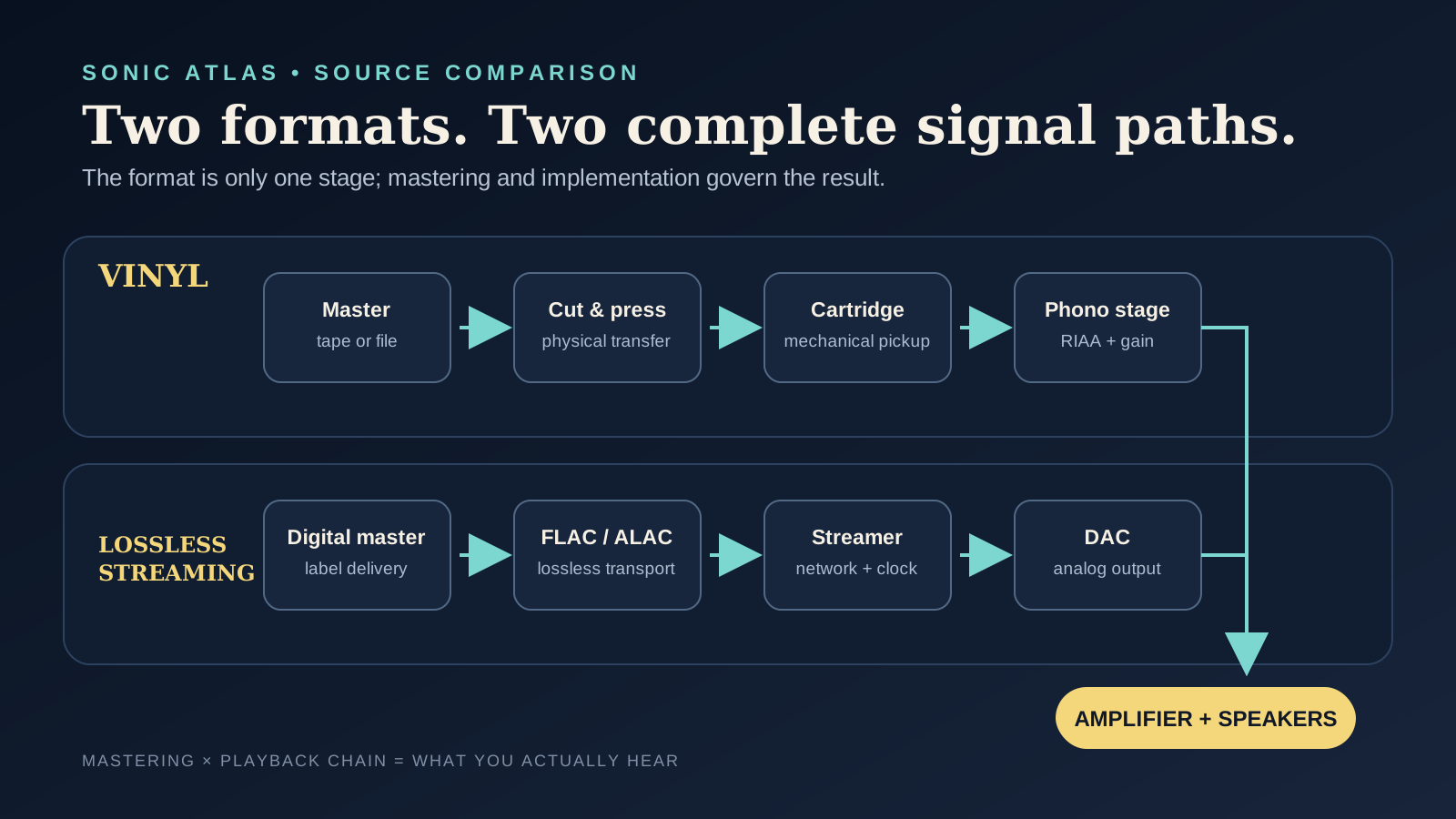
Vinyl begins with a master, passes through cutting electronics and a lacquer, survives plating and pressing, and is finally translated by a stylus, cartridge and phono stage. Every stage can alter frequency response, channel separation, phase behavior, noise and distortion. These deviations are technically imperfections, although some are precisely the qualities listeners experience as body, dimensionality and ease.
Streaming replaces those mechanical stages with a delivered digital master, an encoded file, a network player, clocking, digital conversion and an analog output stage. When configured correctly, the digital chain can be extraordinarily transparent: no surface noise, no eccentricity, no groove wear and no inner-groove penalty. Yet a mediocre DAC, unintended sample-rate conversion, volume processing, Bluetooth transmission or the wrong digital master can squander the theoretical advantage before the first note reaches the preamplifier.
Thus, "vinyl versus streaming" is not one format against another. It is mastering plus playback chain against mastering plus playback chain.
Is Streaming Compressed?
Yes — but the word compression has been forced to perform three unrelated jobs.
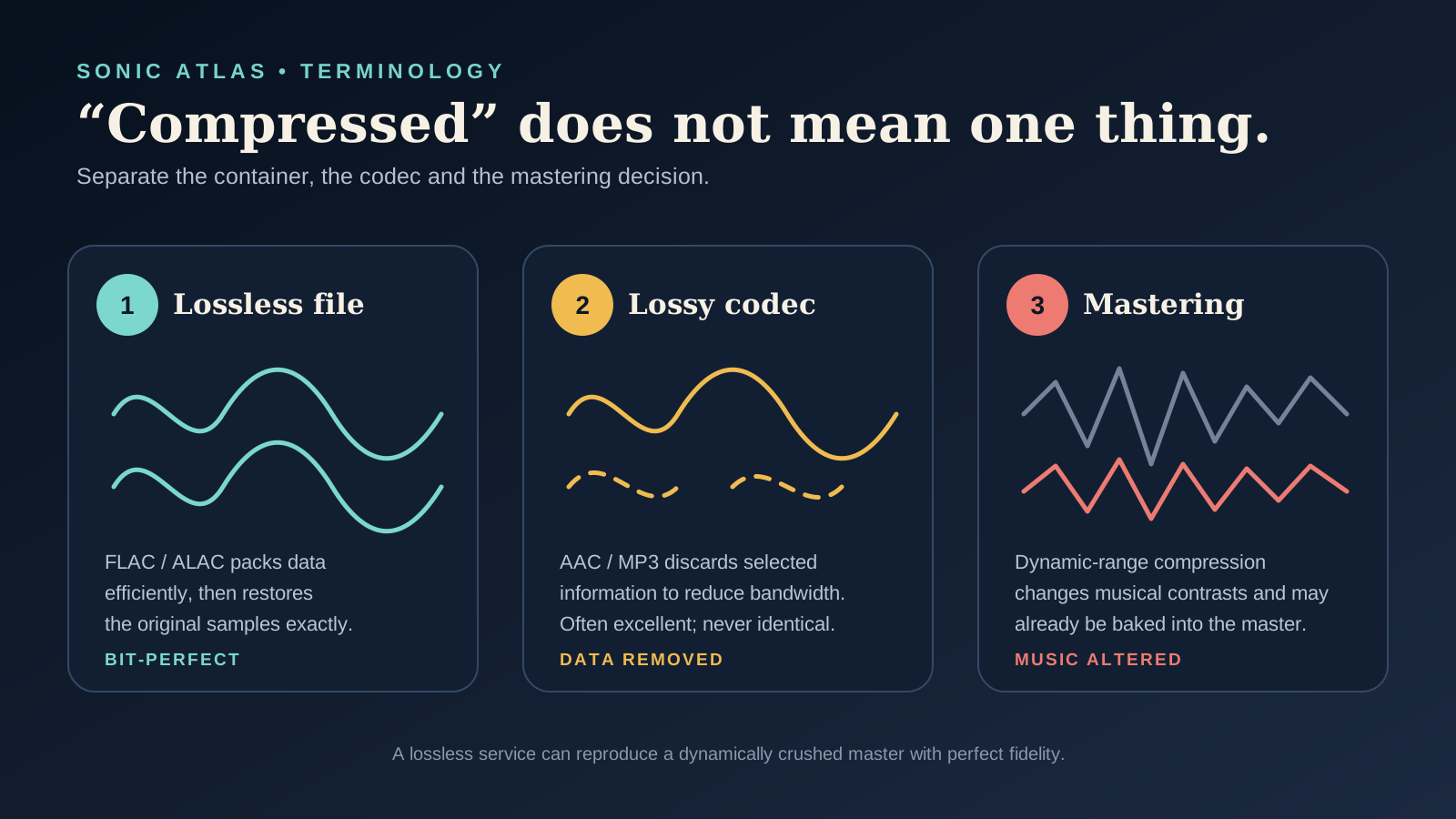
Lossless file compression is benign. FLAC and ALAC reduce the amount of data needed for storage and transmission, but the original audio samples are reconstructed exactly during playback. It is conceptually closer to opening a ZIP file than to shrinking a photograph. Qobuz and Tidal use FLAC; Apple Music uses ALAC. "Compressed" does not automatically mean "compromised."
Lossy codec compression is different. AAC, MP3 and similar codecs discard information judged less audible. At sufficiently high bitrates the result may be remarkably convincing, but it is not identical to the source. Tidal, for example, reserves AAC for its lower-data setting while offering FLAC at its High and Max settings. Spotify still provides lower-bandwidth lossy modes, although Premium lossless playback is now available on eligible accounts and devices.
Dynamic-range compression belongs primarily to mastering. It reduces the difference between quiet and loud passages and may be baked into the file supplied by the label. A lossless stream can therefore reproduce a heavily compressed master with perfect accuracy — which is hardly a victory. Conversely, an LP may receive a more dynamic master, but vinyl is not immune to compression and does not magically restore dynamics removed upstream.
Loudness normalization is another source of confusion. Normally it is a playback gain adjustment, not a remix and not additional dynamic-range compression. Spotify states that its Normal setting targets –14 LUFS and turns louder masters down without adding distortion; its Loud setting can engage a limiter on softer, dynamic material. Apple's optional Sound Check similarly adjusts songs toward a consistent playback volume. For critical comparisons, disable normalization, EQ, crossfade and other processing, then match the actual listening levels as closely as possible.
Which Services Qualify as Audiophile Grade?
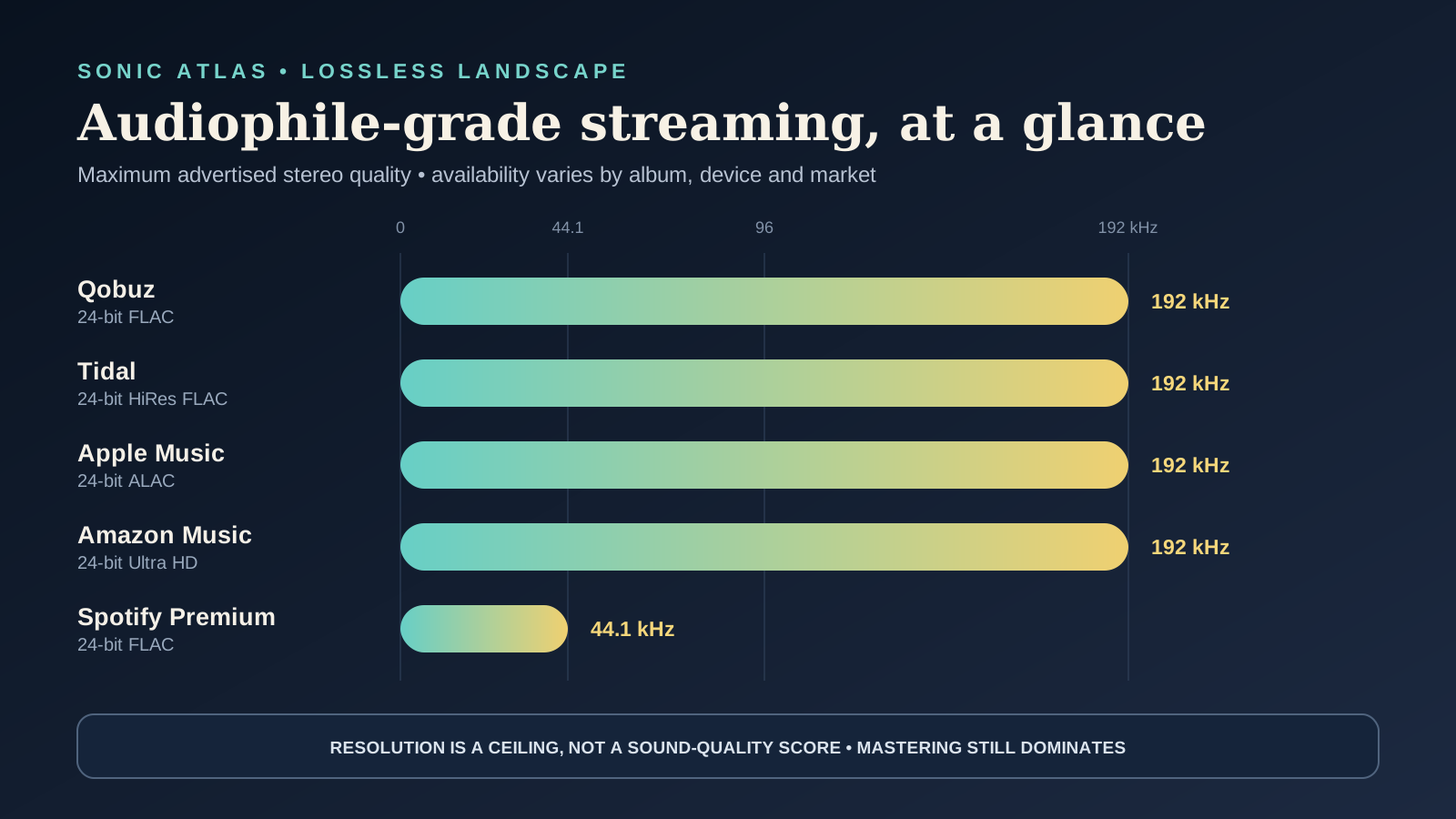
Qobuz remains the purist's obvious candidate. It streams lossless FLAC from 16-bit/44.1 kHz through high-resolution 24-bit/192 kHz, emphasizes editorial context and integrates directly with Roon. Its presentation feels oriented toward albums rather than an infinite slurry of disposable tracks.
Tidal is equally credible technically. Its Max tier can deliver stereo HiRes FLAC up to 24-bit/192 kHz, while its desktop application offers Exclusive Mode for direct control of a compatible DAC. Tidal's larger cultural footprint, Connect ecosystem and Dolby Atmos catalog may make it the more versatile choice.
Apple Music offers ALAC lossless up to 24-bit/192 kHz at no special audiophile surcharge. The caveat is implementation: Apple notes that Bluetooth is not lossless and that playback above 48 kHz generally requires an external DAC. An impressive specification on the screen is irrelevant if the final connection silently changes the signal.
Amazon Music Unlimited supplies HD lossless material at CD quality and Ultra HD releases up to 24-bit/192 kHz. It offers formidable catalog breadth, although its interface and hardware behavior can make confirming the precise playback path less elegant than Qobuz or Tidal.
Spotify Premium finally belongs in the lossless discussion. Its current lossless option reaches 24-bit/44.1 kHz FLAC across much of the catalog, subject to market and device support. It does not offer the 96 or 192 kHz ceiling advertised by several rivals, but a properly mastered 24/44.1 file is not an object of sonic deprivation. Spotify's discovery machinery remains its distinctive advantage.
A Sonic Atlas Archive Test: Katy Lied
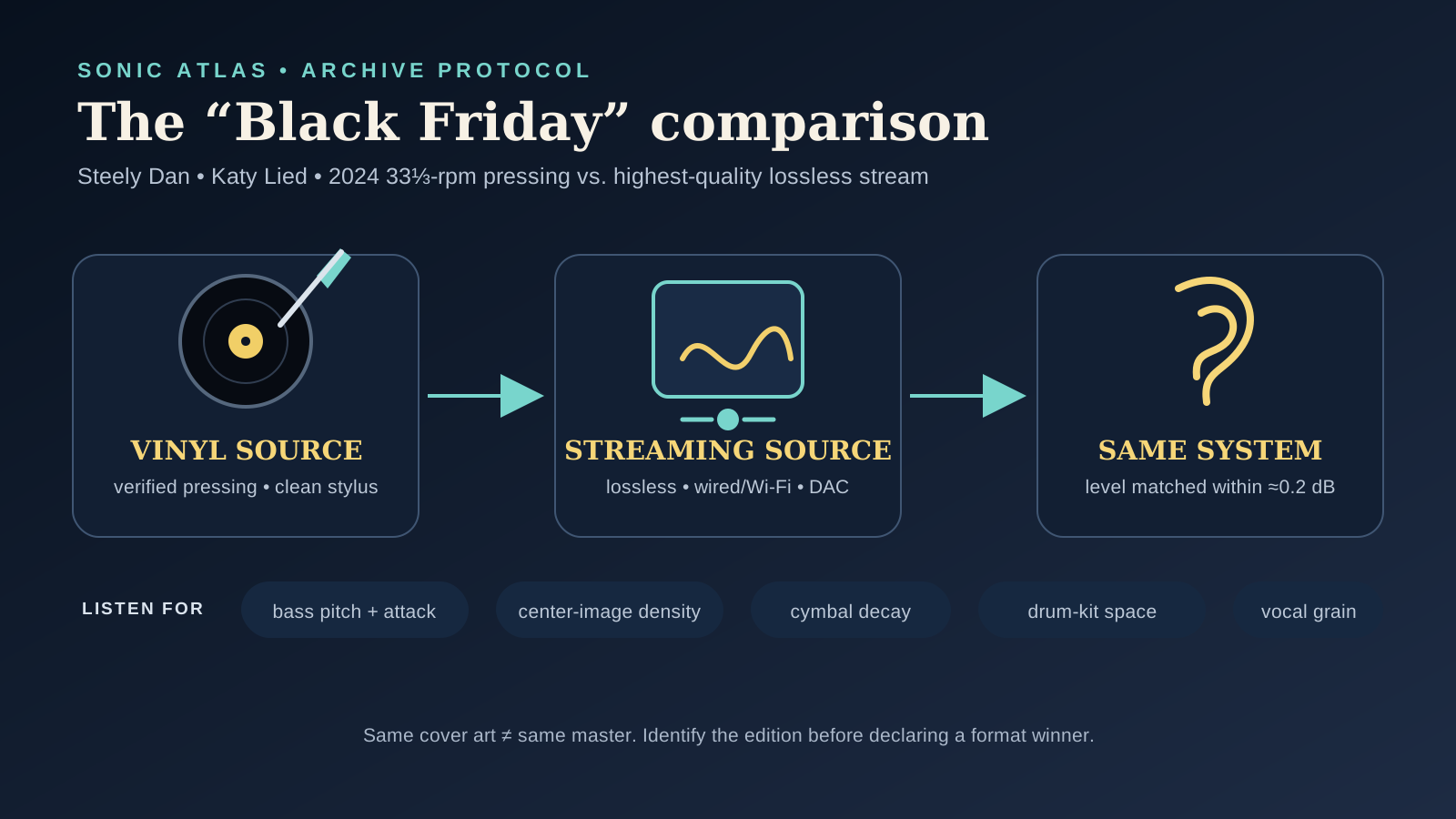
The 2024 33⅓-rpm pressing of Steely Dan's Katy Lied offers a useful archive comparison. Its bass performance on "Black Friday" is already known to be exceptional on the Sonic Atlas reference system. That makes it an excellent controlled test rather than merely another familiar record.
Select the same album on Qobuz or Tidal at the highest available resolution. Confirm the release or remaster date if the service exposes it; identical cover art does not prove identical mastering. Feed the service by Ethernet or reliable Wi-Fi into a competent streamer and DAC, disable normalization and DSP, and match the LP and stream within roughly 0.2 dB. Even a small loudness advantage will usually be mistaken for greater clarity and dynamics.
Then listen for specific events: the leading edge and pitch definition of the bass, the density of the center image, cymbal decay, Donald Fagen's vocal texture and the spatial organization around the drum kit. If the LP is more propulsive while the stream sounds flatter, investigate the mastering before crediting the groove. If the stream produces deeper, tighter bass and a quieter acoustic background, do not assume that "digital glare" must be hiding somewhere out of professional obligation.
The Verdict
On a revealing system, excellent streaming does not sound like a consolation prize. With a lossless service, an appropriate DAC, an unmolested playback path and the right master, it can be reference quality. Vinyl retains a different strength: it sometimes grants access to a superior mastering decision, and its mechanical colorations can be extraordinarily persuasive.
The intellectually respectable conclusion is also the least convenient for format loyalists: the best version wins. Not the newest. Not the one with the largest number beside "kHz." Not automatically the record. The version whose source, mastering and playback chain preserve the most music wins — and a serious system is merely the instrument ruthless enough to reveal it.
The best version wins.
Not the newest. Not the one with the largest number beside "kHz." Not automatically the record.
Keep Reading
Vinyl vs. CD: Can You Actually Hear the Difference?
After ripping hundreds of LPs at 24-bit/192kHz through a tube signal chain, we have a clear answer — and it's not what purists on either side want to hear.
Aja Breathes; Gaucho Merely Has Excellent Manners
Why Steely Dan's 1977 masterpiece Aja remains sonically preferable to its immaculately upholstered successor Gaucho. Gaucho is perfection completed; Aja is perfection kept alive.
Why Do Different Vinyl Pressings Sound Different? Mastering, Matrix Numbers & Pressing Plants Explained
Two records can contain the same album and still sound conspicuously different. Learn why mastering, lacquer cutting, metalwork, and pressing plants all leave an audible fingerprint on vinyl.
Supertramp Paris vs. Live in Paris '79: Which Sounds Better?
Same tour, same venue, different nights — and a strikingly different sonic result. A firsthand vinyl comparison with a clear verdict.